English Drills
Home › Teacher lessons › Māori Culture

Māori Culture

Explore te reo Māori, marae, waiata and tikanga while practising respectful everyday English.

A245–55 minutesNew Zealand CollectionPrintable
Teacher lesson: Look at the picture and title. What do you already know about this topic? Write two ideas, then compare with a partner. Work through the nine panels in order, or choose the sections that suit your class. Teacher answers and the listening script are stored separately.
Teacher AnswersBack to New Zealand Collection
1 Lesson Goals
Māori Culture

By the end of this lesson, I will be able to:

  • understand the main ideas and key details in Māori Culture .
  • use important vocabulary from the lesson.
  • share ideas in speaking and writing.
Start here: Look at the picture and title. What do you already know about this topic? Tell a partner one idea.
2 Reading
Before you read:

Look at the picture and title. What do you already know about this topic? Write two ideas, then compare with a partner.

Māori are the tangata whenua, the Indigenous people of Aotearoa New Zealand. Māori culture is part of everyday life across the country. Te reo Māori, the Māori language, can be heard in greetings, place names, schools, media and public life. A marae is an important place for community gatherings. The wharenui, or meeting house, often stands at the centre of a marae and can represent ancestors and history. Visitors may take part in a pōwhiri, a formal welcome, and may hear waiata, or songs. Tikanga refers to values, customs and ways of doing things. Customs can differ between iwi, hapū and marae, so visitors should listen carefully to their hosts and follow local guidance. Learning a few words of te reo Māori and showing respect are good ways to take part positively.
3 Vocabulary
Words: marae · wharenui · pōwhiri · waiata · tikanga

Write a short meaning or synonym for each word.

4 Check Your Understanding
1. Who are tangata whenua in Aotearoa New Zealand?
2. Where can people hear te reo Māori?
3. What is a marae used for?
4. What might visitors hear during a pōwhiri?
5. Why should visitors listen to local guidance?
5 Language Focus

Complete with should or can: 1. Visitors ___ listen carefully to their hosts. 2. People ___ learn simple greetings in te reo Māori. 3. Customs ___ differ between marae. 4. Visitors ___ show respect during a formal welcome.

6 Listen & Speak

Listen: Your teacher will read the text twice. Answer the questions.

1. Where does the class go?
2. What does the teacher tell them to do?
3. What do the students hear during the welcome?
4. What do they ask questions about?

Speak: What are respectful ways to behave when you visit a place that is important to another culture?

7 Use Your English

Write: Write 6–8 sentences about something you learned from this lesson. Include at least three vocabulary words.

8 Puzzle or Game

Culture Vocabulary Relay: In teams, match the five Māori words to their English explanations. Then use each word in a short sentence.

9 Success Criteria
  • ☐ I can explain the main idea.
  • ☐ I can use at least three new words.
  • ☐ I can complete the language task.
  • ☐ I can share an idea in spoken or written English.
10 Visual Gallery
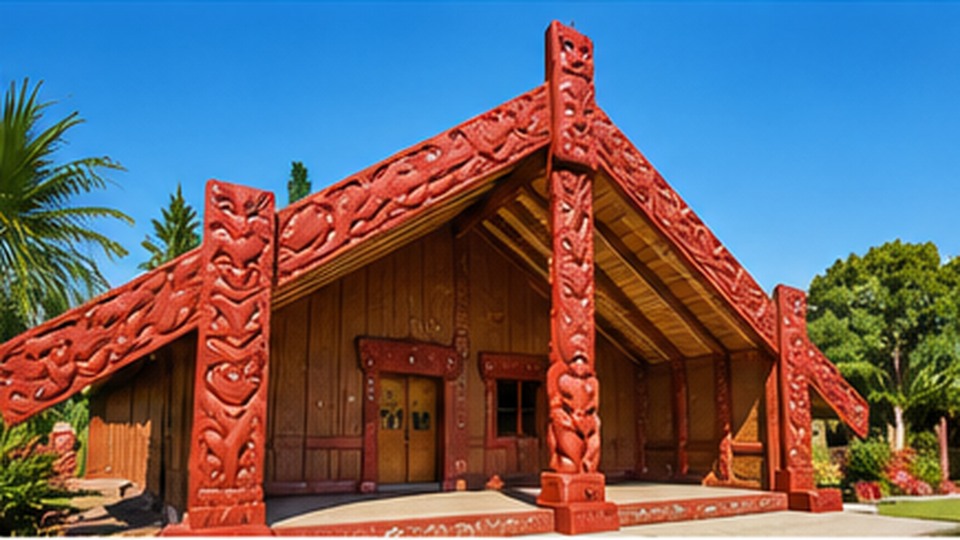
A carved wharenui at a marae
Marae and WharenuiA marae is an important Māori meeting place. The wharenui is the carved meeting house at the centre.
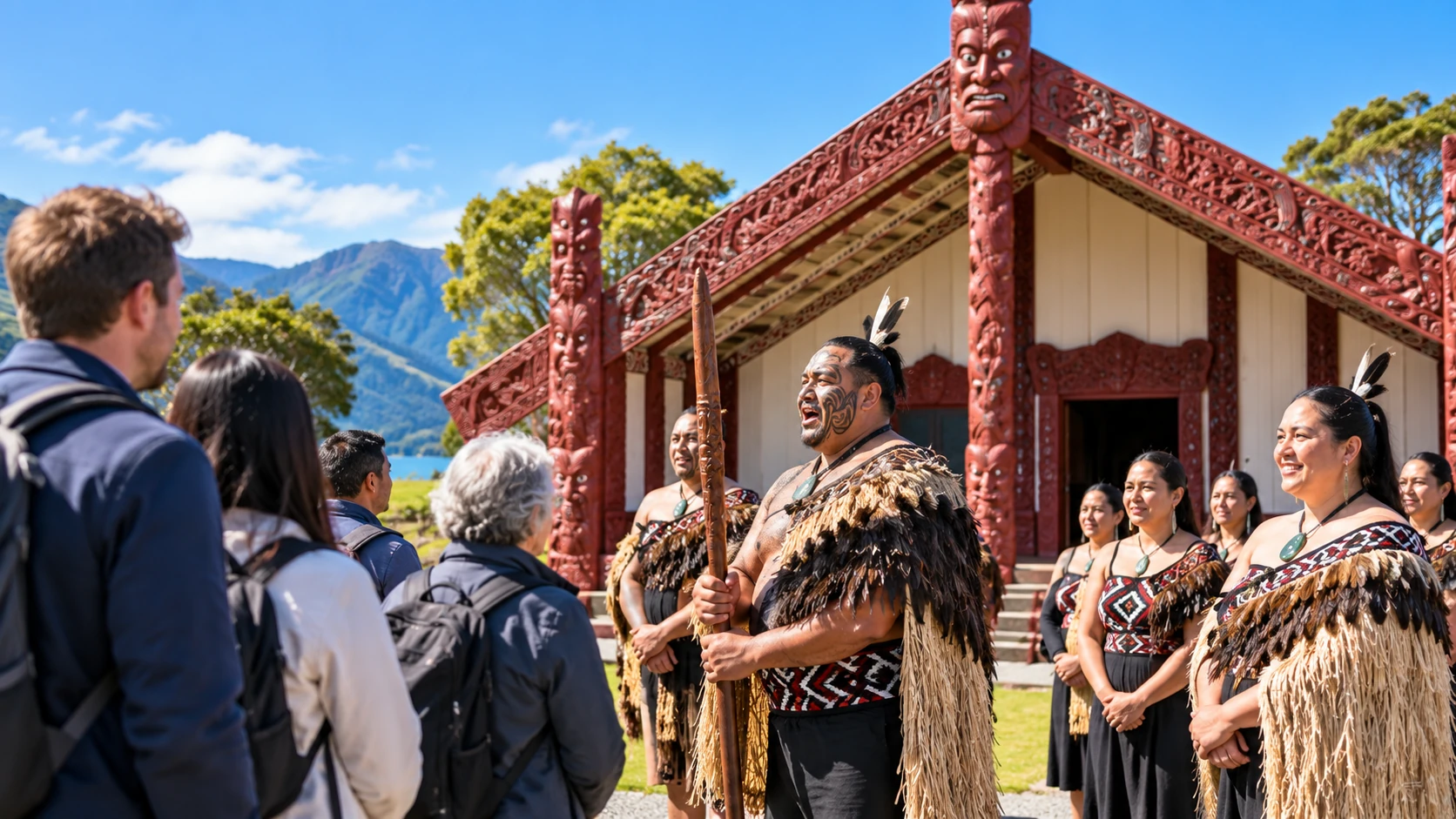
A pōwhiri welcome taking place outside a marae
PōwhiriA pōwhiri is a formal welcome. Visitors listen carefully and follow the guidance of their hosts.
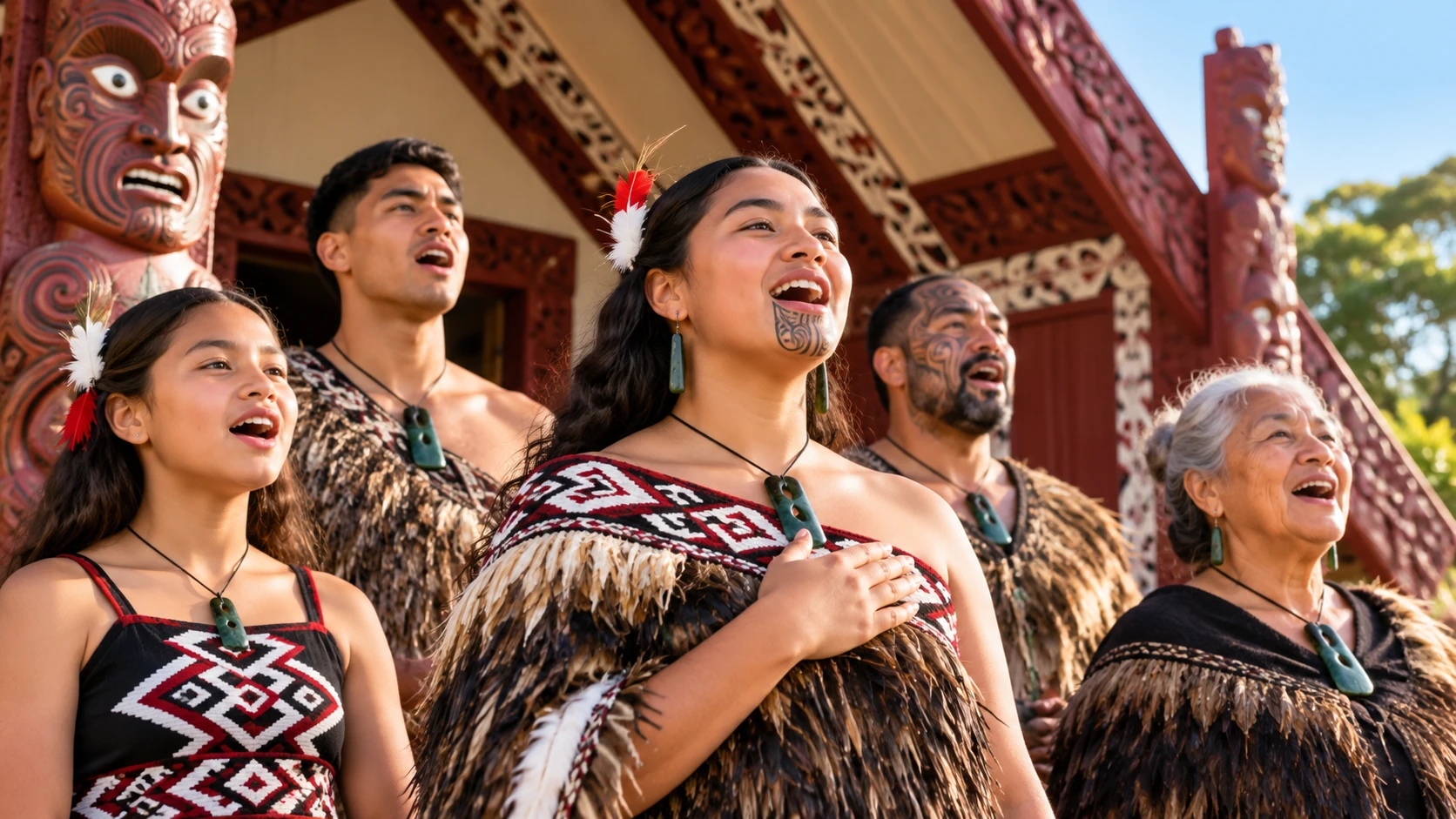
A group singing a waiata in front of a wharenui
WaiataA waiata is a song. It can be part of welcomes, ceremonies and shared community occasions.
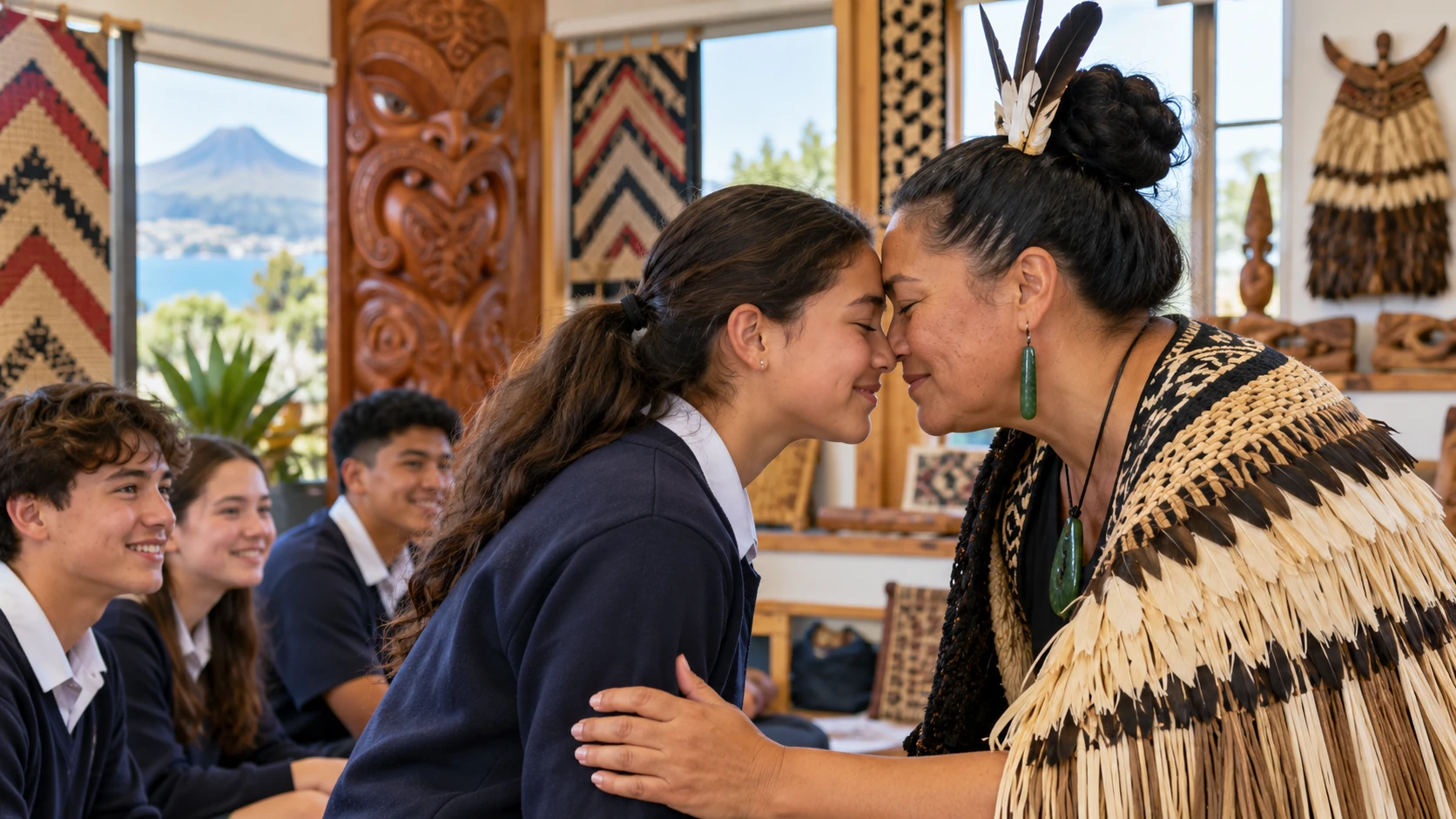
A respectful hongi greeting in a Māori learning space
HongiA hongi is a traditional greeting in which people gently touch noses and foreheads as a sign of respect and connection.