1Lesson Goals
I will be able to:
- describe activities at a playground.
- use comparative adjectives.
- plan an outing with a partner.
Start here: What makes a playground a good place for families?
Christchurch · Play and community
I will be able to:
Start here: What makes a playground a good place for families?
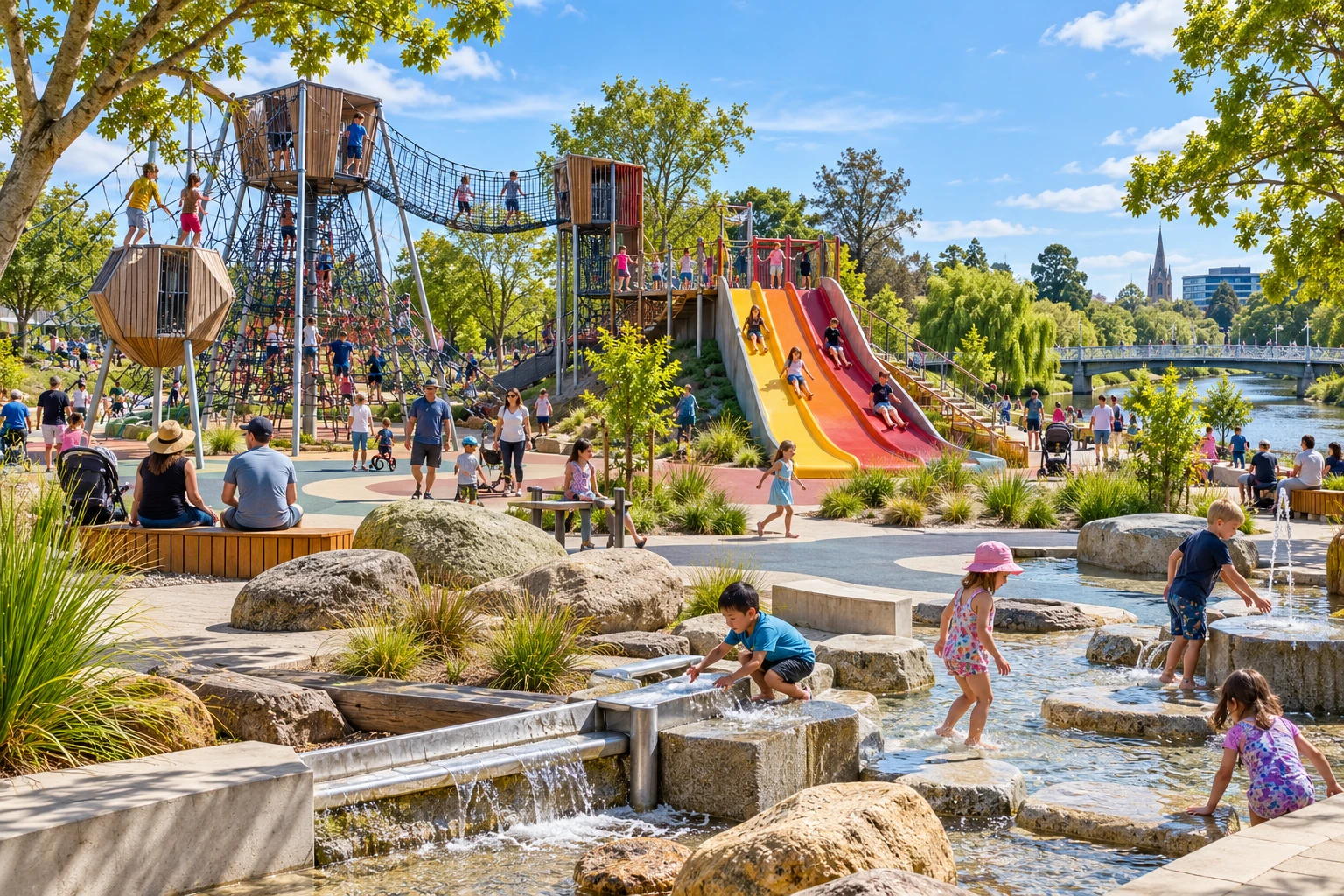
Margaret Mahy Playground is a large public playground in central Christchurch, beside the Ōtākaro Avon River. It is named after Margaret Mahy, a well-known New Zealand writer of children’s books. Families, local people and visitors come here to play and spend time together.
There are different kinds of equipment, including slides, swings, tunnels and a climbing tower. The water-play area has water cannons and sprinklers. Children can choose activities that suit their interests and abilities.
A playground is more than a collection of equipment. It is also a place to meet people, take turns and try something new. Children may feel proud when they finish a climbing challenge. They can learn to share equipment and encourage one another.
Visitors do not all enjoy the same activities. Some children prefer a quiet game, while others like climbing or water play. Families can plan a visit around the needs of their group.
Before an outing, discuss where to meet and what to bring. Read the signs at the playground and keep an eye on younger children. A thoughtful plan helps everyone enjoy time outdoors.
Match 1–6 with A–F.
A. a difficult task that tests your skills
B. the skill to do something
C. a short trip for enjoyment
D. objects used for an activity
E. to give someone confidence or support
F. a passage you can move through
Use two words in your own sentences.
Answer in sentences. Use the reading.
Compare two things: small → smaller; easy → easier; exciting → more exciting.
Use than: The tower is taller than the slide.
Write the comparative form of the adjective.
Listen: Your teacher will read a short script twice. Answer these questions.
Then discuss with a partner:
Try: I think… because… / We could… / What do you think?
Margaret Mahy Playground — continued
Write 60–80 words planning a playground outing. Include who, a meeting time, two activities and two things to bring. Use one comparative adjective.
Plan your ideas, then write.
Check capitals, punctuation and verb forms.
Playground word pairs: Match the words to make useful phrases.
1. take
2. climbing
3. water
4. meet
A. tower B. friends
C. turns D. play
Use two phrases to describe a good outing.
Exit reflection: One thing I learned…
One thing I want to practise…
Final challenge: Create a simple outing plan with three activities in order. Explain who each activity suits. Use two comparative adjectives and give one reason for your choices.