Why Cities Plant Trees
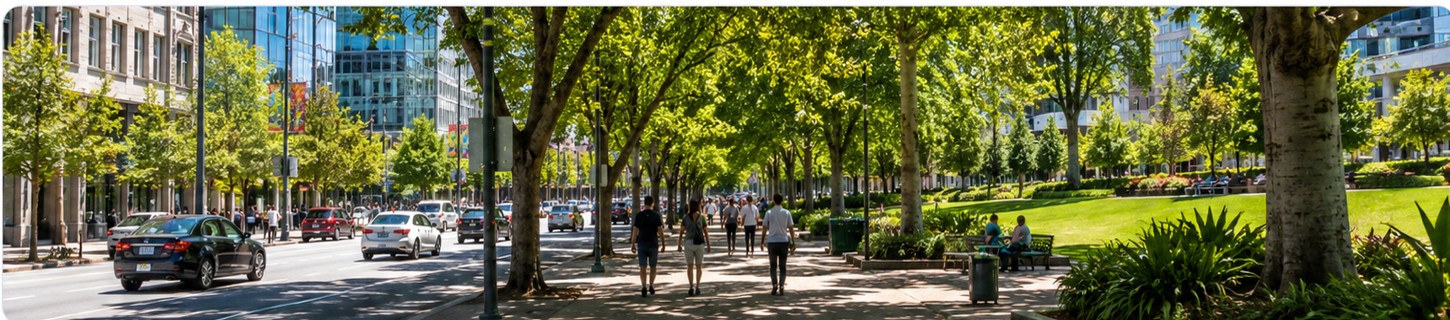
City trees do much more than make streets look attractive. On hot days, their leaves provide shade for people and buildings. Trees also release water vapour, which can help cool the surrounding air. This is particularly useful in areas covered by concrete and asphalt, which absorb heat during the day.
Trees can also improve the urban environment in other ways. Their roots slow rainwater as it enters the ground, reducing pressure on drains during heavy rain. Leaves can trap some airborne particles, while branches provide shelter and nesting places for birds and insects.
However, planting a city tree requires planning. A species that grows too large may damage footpaths or interfere with power lines. Young trees need water and protection, and older trees require regular checks for disease or weak branches.
For these reasons, successful urban planting is not simply about putting more trees into the ground. Cities need to choose suitable species, plant them in the right places and care for them over many years.
Questions
Why Cities Plant Trees — Answer Key
Continue practising
Build on this activity with another closely related practice.