Psalm 23 · The Lord is my shepherd
Words to know Shepherd means a person who looks after sheep. A valley is low land between hills or mountains.
Read and think Why does the writer feel safe in the dark valley?
Complete a Bible lesson online and save your answers, or print the A4 lesson and teacher answer sheet.

Explore Bible stories through reading, vocabulary, grammar, speaking and writing. Choose a lesson for A1–B1 learners, with colourful printable panels and separate teacher answers. These simplified retellings include Bible references and welcome learners from any background.
 B1 · Luke 10:25–37
Kindness, neighbours and helping others; practise past tense and story order.
Open lesson → A2 · Luke 15:3–7
A shepherd searches for one sheep; practise numbers, feelings and simple questions.
Open lesson → B1 · Ruth 1–2
Family, loyalty and a new beginning; practise journeys and reasons with because.
Open lesson → B1 · 1 Samuel 17
Courage, faith and preparation; practise descriptions and comparisons.
Open lesson → B1 · Matthew 7:24–27
Choices, foundations and putting learning into practice; use cause and effect.
Open lesson →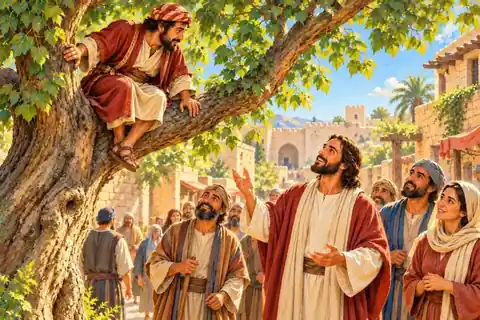 A2 · Mark 4:35–41
Weather, feelings and trust; practise was and were.
Open lesson → A2 · John 6:1–13
Food, sharing and numbers; practise some and any.
Open lesson → B1 · Luke 19:1–10
Welcoming others and making amends; practise reasons with because.
Open lesson →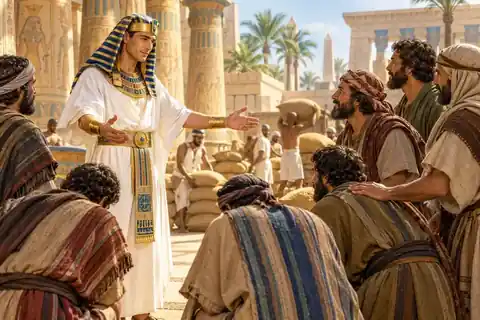 B1 · Daniel 6:1–23
Faithfulness, courage and difficult choices; practise although.
Open lesson → B1 · Luke 15:11–32
Forgiveness, family and a fresh start; practise sequencing words.
Open lesson → A2 · Exodus 2:1–10
A baby is kept safe; practise the past simple and words for places.
Open lesson → B1 · Genesis 45:1–15; 50:15–21
Family, forgiveness and practical care; practise reported speech.
Open lesson → B1 · Esther 4:1–17; 5:1–8; 7:1–6; 8:11–17
Courage and speaking up; practise the first conditional.
Open lesson → A2 · Luke 10:38–42
Listening and feeling busy; practise the past continuous.
Open lesson → B1 · Mark 2:1–12
Friends overcome an obstacle; practise could and couldn’t.
Open lesson → B1 · Jonah 1–3
Running away and a second chance; practise sequencing words.
Open lesson → A2 · 1 Samuel 3:1–10
Hearing a call and learning to listen; practise past simple verbs.
Open lesson → A2 · Luke 2:1–20
Good news in Bethlehem; practise there was and there were.
Open lesson →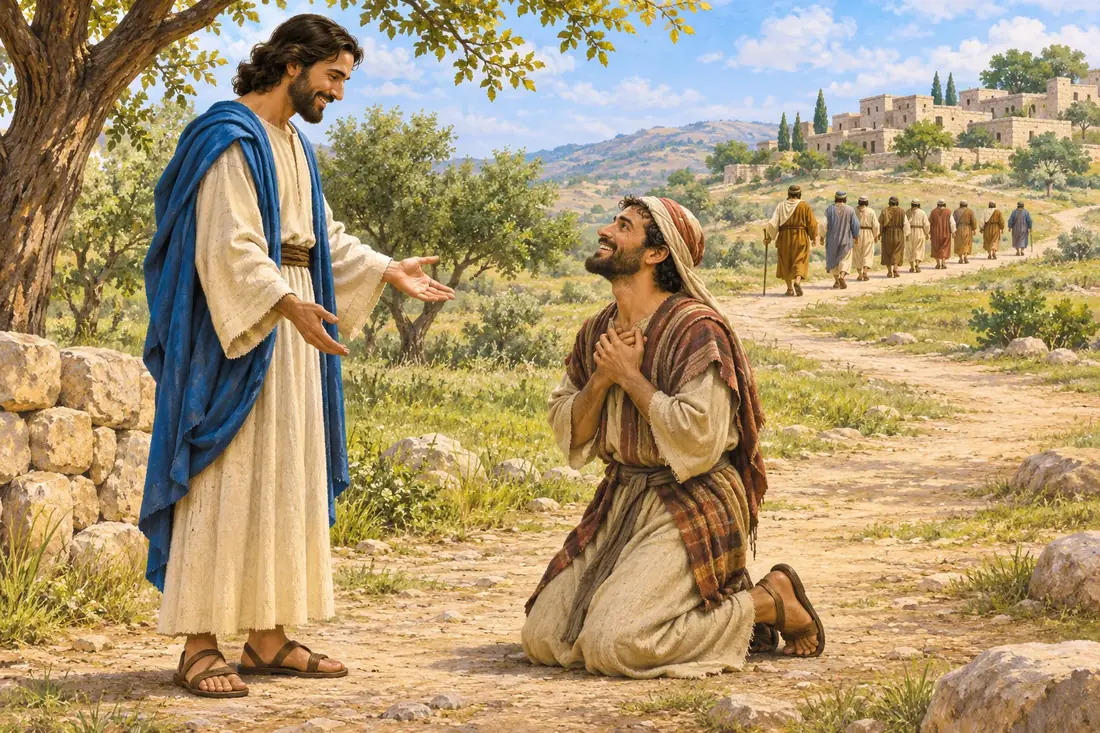 A2 · Luke 17:11–19
Healing and giving thanks; practise past simple questions with did.
Open lesson →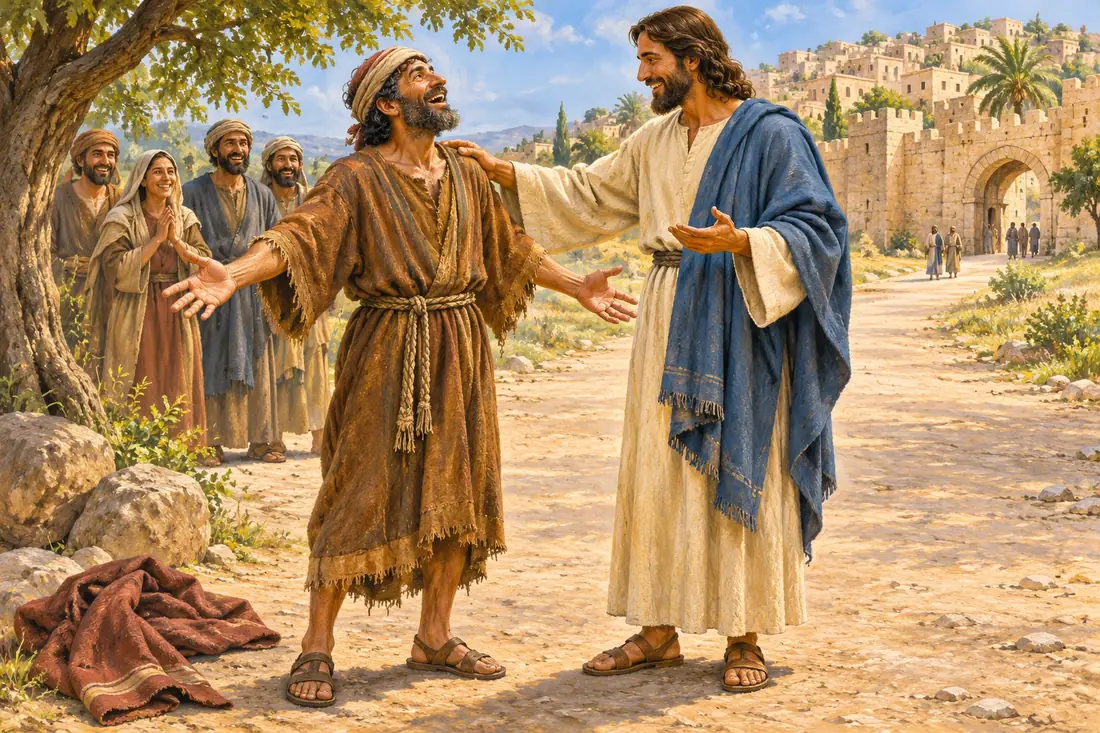 A2 · Mark 10:46–52
Asking for help and being heard; practise could and couldn’t.
Open lesson → B1 · Luke 24:13–35
A surprising meeting after the resurrection; practise past continuous and past simple.
Open lesson →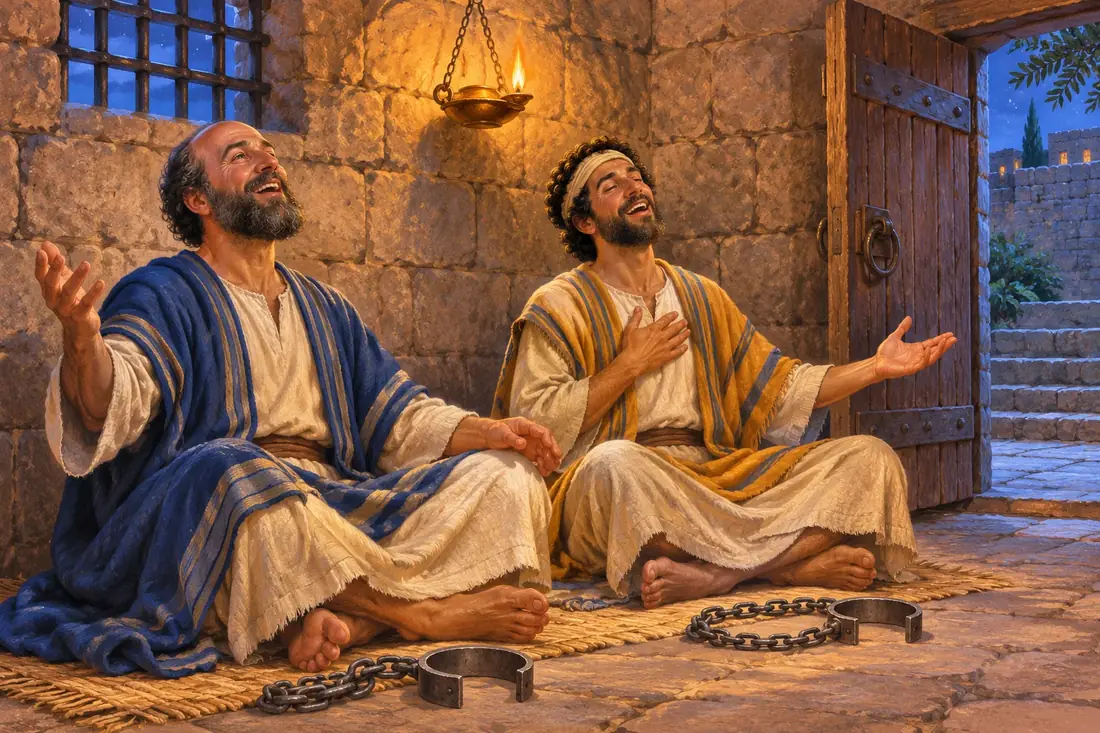 B1 · Acts 16:22–34
Faith, care and an unexpected welcome; practise although.
Open lesson →Explore Bible characters and the choices they made through illustrated, ten-panel English lessons. Complete them online and save answers on your device, or print the student lesson.
A2 · Ruth 1:6–18; 2:1–12Loyalty and practical kindness
Open lesson →B1 · Genesis 45:1–15; 50:15–21Forgiveness and responsibility
Open lesson →B1 · Esther 4:10–17; 5:1–3Courage and careful action
Open lesson →B1 · Daniel 6:1–23Faithfulness and integrity
Open lesson →A2–B1 · Luke 10:25–37Compassion and practical help
Open lesson →A2–B1 · Luke 10:38–42Hospitality, listening and priorities
Open lesson →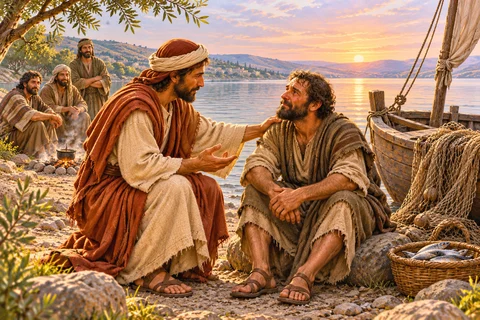 A2–B1 · Luke 22:54–62; John 21:15–19
Taking responsibility and beginning again
Open lesson → B1 · Nehemiah 2:11–20; 4:6–15
Planning, teamwork and perseverance
Open lesson →Explore five prayers from the Bible through illustrated, ten-panel English lessons. Complete them online and save answers on your device, or print the student lesson.
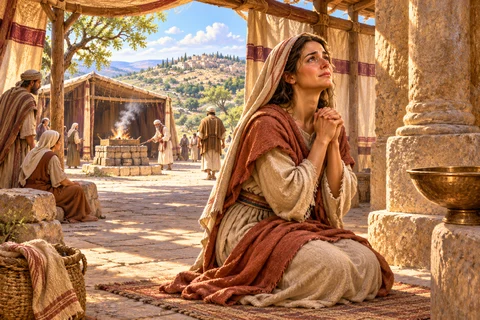 A2 · 1 Samuel 1:9–20
Hannah speaks honestly about her deep sadness and makes a promise.
Open lesson →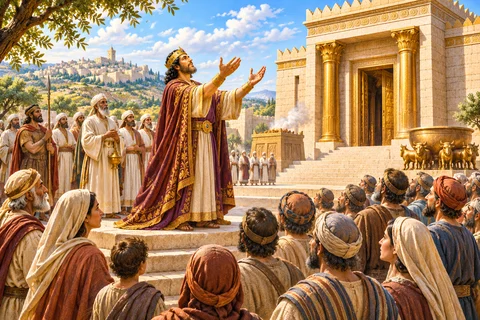 B1 · 1 Kings 8:22–53
Solomon asks God to hear people and show mercy.
Open lesson →A2–B1 · Nehemiah 1:4–11Nehemiah prays after hearing that Jerusalem’s walls are broken.
Open lesson →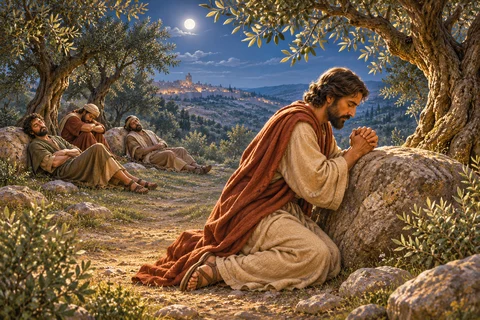 B1 · Luke 22:39–46
Jesus shares his distress with God and asks for strength.
Open lesson →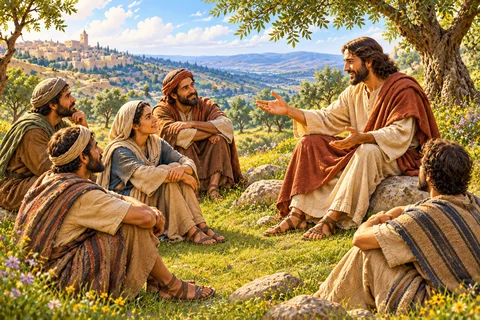 A2 · Matthew 6:5–13
Jesus teaches his followers to pray simply and sincerely.
Open lesson →Read these songs and prayers from the Bible in the English Standard Version (ESV).
 ESV · Psalm 23
David describes the Lord as a shepherd who guides and cares for him.
Read in the ESV → ESV · Psalm 46
The writers describe finding safety in God when the world around them seems to be falling apart.
Read in the ESV → ESV · Psalm 100
This psalm invites people everywhere to worship the Lord with joy and thanksgiving.
Read in the ESV → ESV · Psalm 121
The writer looks towards the hills and asks where help comes from.
Read in the ESV →Words to know Shepherd means a person who looks after sheep. A valley is low land between hills or mountains.
Read and think Why does the writer feel safe in the dark valley?
Words to know A refuge is a place where you can find safety. Roar means to make a loud, deep sound.
Read and think What happens to the mountains and the sea? How do the people respond?
Words to know Praise means to say what is good about someone. A generation is a group of people born around the same time.
Read and think What two things are people told to do when they come before the Lord?
Words to know Shade is a place out of direct sunlight. To watch over someone is to look after them and keep them safe.
Read and think What does the Lord promise to watch over in the final verse?
Choose a hymn for a full ten-panel English lesson. Each has an illustrated index card, a lesson picture, a printable worksheet and teacher guidance.
 A2 · Classic hymn
Grace and a new beginning · a full ten-panel lesson with an illustrated reading activity.
Open lesson → B1 · Classic hymn
Guidance and what matters most · a full ten-panel lesson with an illustrated reading activity.
Open lesson → A2 · Classic hymn
Praise and God’s holiness · a full ten-panel lesson with an illustrated reading activity.
Open lesson → B1 · Classic hymn
Peace during hardship · a full ten-panel lesson with an illustrated reading activity.
Open lesson → B1 · Classic hymn
God’s presence through change · a full ten-panel lesson with an illustrated reading activity.
Open lesson → A2 · Classic hymn
Friendship and prayer · a full ten-panel lesson with an illustrated reading activity.
Open lesson →Grace and a new beginning · John Newton · 1779
A2 · 45–60 minutes · Printable
Teacher note: Read the original teaching text in panel 2. Follow the link for the hymn’s words. Discuss the Christian meaning respectfully; learners may use imagined examples. Related passage: Ephesians 2:8–9 (ESV).
Name: _______________________ Date: ____________ Student worksheet · 1 / 2
I will be able to:
John Newton wrote this hymn in the eighteenth century. He had worked on ships and later became a Christian minister. Looking back on his life, he wrote about grace: God’s kindness to people who have not earned it. The hymn describes a person whose life changes when he understands that kindness. The singer remembers being lost and then finding a new direction. Today, many people sing this hymn when they want to express gratitude or hope. The words also invite a question: Can a person change? Newton’s hymn answers with a strong sense of hope.
Read the hymn words on Hymnary ↗
Watch Amazing Grace on YouTube ↗
Original teaching text about Amazing Grace; the hymn words are available at the linked source.
Read the words, then use two in your own sentences.
Use the reading above. Answer in complete sentences.
Past and present: complete “Newton worked on ships, but later he ___ a minister.” Then write one sentence about a past experience and one about the present.
Tell a partner about a fresh start in a story or an imagined life. What changed, and why?
Use I think … because … to give a reason. You may use an imagined example.
Name: _______________________ Date: ____________ Student worksheet · 2 / 2
Write 60–80 words about a person who receives kindness and makes a new start. Use first, then and now.
Plan your ideas, then check spelling and punctuation.
Sort these words into Past or Present: wrote, sing, worked, remembers, changed, invite.
One thing I learned:
In 4–5 sentences, explain the main idea of Amazing Grace. Use two ideas from the reading and the word grace.
Write below or prepare a short spoken response in your own words.
Vocabulary: grace = unearned kindness; minister = church leader; gratitude = thankfulness; direction = a way forward. Reading: John Newton; unearned kindness; a person moves from being lost to a new direction; gratitude or hope. Language: became. Game: Past—wrote, worked, changed; Present—sing, remembers, invite.
Accept other well-supported responses for speaking and writing.
Guidance and what matters most · Eleanor Hull’s English verses · 1912
B1 · 45–60 minutes · Printable
Teacher note: Read the original teaching text in panel 2. Follow the link for the hymn’s words. Discuss the Christian meaning respectfully; learners may use imagined examples. Related passage: Psalm 73:24–26 (ESV).
Name: _______________________ Date: ____________ Student worksheet · 1 / 2
I will be able to:
This hymn began as an old Irish prayer. In the early twentieth century, Eleanor Hull made English verses from an earlier translation. The singer asks God to shape the way they see the world. Vision here means more than sight: it means understanding what matters. The hymn contrasts lasting wisdom with wealth or public praise. It also speaks of guidance during both ordinary days and difficult times. When learners read it, they can ask which images suggest light, direction and a steady purpose. The hymn’s main request is for God to remain at the centre of life.
Read the hymn words on Hymnary ↗
Watch Be Thou My Vision on YouTube ↗
Original teaching text about Be Thou My Vision; the hymn words are available at the linked source.
Read the words, then use two in your own sentences.
Use the reading above. Answer in complete sentences.
Contrast ideas with although: complete “Although wealth can be useful, ___.” Write two more sentences about things people value.
What helps a person make a wise decision? Give two reasons without sharing private details.
Use I think … because … to give a reason. You may use an imagined example.
Name: _______________________ Date: ____________ Student worksheet · 2 / 2
Write 70–90 words comparing two things people value. Use although and because.
Plan your ideas, then check spelling and punctuation.
Find the opposite or contrast: wisdom / foolishness; wealth / poverty; light / darkness; lasting / temporary. Explain one pair.
One thing I learned:
Explain the hymn’s central request in five sentences. Include vision as a metaphor and one contrast.
Write below or prepare a short spoken response in your own words.
Vocabulary: vision = understanding; wisdom = good judgement; wealth = possessions; purpose = aim. Reading: an old Irish prayer; Eleanor Hull; understanding what matters; wisdom or guidance. Language and writing answers vary if the contrast is clear.
Accept other well-supported responses for speaking and writing.
Praise and God’s holiness · Reginald Heber · 1823
A2 · 45–60 minutes · Printable
Teacher note: Read the original teaching text in panel 2. Follow the link for the hymn’s words. Discuss the Christian meaning respectfully; learners may use imagined examples. Related passage: Revelation 4:8 (ESV).
Name: _______________________ Date: ____________ Student worksheet · 1 / 2
I will be able to:
Reginald Heber wrote this hymn for Christian worship. It praises God and draws on images from the Bible, including a scene of heavenly worship. The repeated word holy helps make the main idea easy to hear and remember. In Christian language, holy describes God as completely good and set apart. The hymn moves from morning praise to a wider picture of creation joining in worship. Repeating a word can add rhythm and emphasis. As you read, notice which words express admiration and which images help you imagine the scene.
Read the hymn words on Hymnary ↗
▶ Watch “Holy, Holy, Holy” on YouTube ↗
Original teaching text about Holy, Holy, Holy; the hymn words are available at the linked source.
Read the words, then use two in your own sentences.
Use the reading above. Answer in complete sentences.
Repetition adds emphasis. Write one sentence with a repeated word for emphasis, then rewrite it without repetition. Which sounds stronger?
Describe a scene of praise or celebration. What words, sounds or actions would you notice?
Use I think … because … to give a reason. You may use an imagined example.
Name: _______________________ Date: ____________ Student worksheet · 2 / 2
Write 60–80 words about the effect of repetition in this hymn. Give two examples from your reading or its ideas.
Plan your ideas, then check spelling and punctuation.
Match the word to its role: holy / description; worship / action; creation / group; repeat / technique.
One thing I learned:
Explain how the hymn expresses praise. Name one repeated word and one image.
Write below or prepare a short spoken response in your own words.
Vocabulary: holy = set apart; worship = honour God; repeat = say again; creation = living world. Reading: Reginald Heber; completely good and set apart; rhythm and emphasis; from morning praise to all creation.
Accept other well-supported responses for speaking and writing.
Peace during hardship · Horatio G. Spafford · 1873
B1 · 45–60 minutes · Printable
Teacher note: Read the original teaching text in panel 2. Follow the link for the hymn’s words. Discuss the Christian meaning respectfully; learners may use imagined examples. Related passage: Psalm 62:5–8 (ESV).
Name: _______________________ Date: ____________ Student worksheet · 1 / 2
I will be able to:
Horatio Spafford wrote the words of this hymn after a time of deep family loss. Its message does not pretend that hardship is easy. Instead, it describes a person who seeks peace while facing pain. The images of a river and a sea show how circumstances can change. A calm river suggests quiet; a rough sea suggests trouble. Both images help the writer express a steady trust that is deeper than a changing situation. Readers may respond differently to this hymn. In this lesson, focus on the language of contrast and the images the writer chooses.
Read the hymn words on Hymnary ↗
Watch It Is Well with My Soul on YouTube ↗
Original teaching text about It Is Well with My Soul; the hymn words are available at the linked source.
Read the words, then use two in your own sentences.
Use the reading above. Answer in complete sentences.
Use while to show a contrast: “The sea is rough while the river is calm.” Write two sentences that contrast difficult circumstances with a steady response.
Discuss a fictional person facing a difficult day. What might help them feel supported?
Use I think … because … to give a reason. You may use an imagined example.
Name: _______________________ Date: ____________ Student worksheet · 2 / 2
Write 70–90 words about how the river and sea images help express the hymn’s message. Use while or although.
Plan your ideas, then check spelling and punctuation.
Sort into Calm or Trouble: still water, strong waves, shelter, storm, quiet shore, danger. Explain one choice.
One thing I learned:
In 5–6 sentences, explain how the hymn can speak about both sorrow and peace. Include an image and a contrast.
Write below or prepare a short spoken response in your own words.
Vocabulary: hardship = difficulty; circumstances = situation; steady = stable; contrast = difference. Reading: after family loss; river and sea; calm and trouble; no, it acknowledges pain. Game answers may vary with a reason.
Accept other well-supported responses for speaking and writing.
God’s presence through change · Henry Francis Lyte · 1847
B1 · 45–60 minutes · Printable
Teacher note: Read the original teaching text in panel 2. Follow the link for the hymn’s words. Discuss the Christian meaning respectfully; learners may use imagined examples. Related passage: Luke 24:29 (ESV).
Name: _______________________ Date: ____________ Student worksheet · 1 / 2
I will be able to:
Henry Francis Lyte wrote this hymn as a prayer asking God to stay near. The old word abide means remain or stay. Evening is important in the hymn. It can mean the end of a day, but it also points to the end of a life. This is a metaphor: a familiar scene helps a writer express a deeper idea. The hymn speaks honestly about change and weakness, then asks for faithful companionship. You do not have to tell a personal story to discuss it. Think about how the evening image creates a gentle but serious mood.
Read the hymn words on Hymnary ↗
Listen to Abide with Me on YouTube ↗
Original teaching text about Abide with Me; the hymn words are available at the linked source.
Read the words, then use two in your own sentences.
Use the reading above. Answer in complete sentences.
Use both literal and figurative meaning: “Evening is the end of a day. In this hymn, it can also mean ___.” Write your own metaphor using a season or time of day.
How can a setting change the mood of a poem or hymn? Describe a made-up scene.
Use I think … because … to give a reason. You may use an imagined example.
Name: _______________________ Date: ____________ Student worksheet · 2 / 2
Write 70–90 words explaining the evening metaphor. Use the words literally and figuratively.
Plan your ideas, then check spelling and punctuation.
Choose the best mood words and explain: hopeful, noisy, gentle, serious, playful, reflective.
One thing I learned:
Explain the title and the evening metaphor in five sentences. Support your answer with two ideas from the reading.
Write below or prepare a short spoken response in your own words.
Vocabulary: abide = remain; eventide = evening; metaphor = image for another idea; companionship = being together. Reading: stay; end of day and life; God’s presence; gentle and serious.
Accept other well-supported responses for speaking and writing.
Friendship and prayer · Joseph M. Scriven · 1855
A2 · 45–60 minutes · Printable
Teacher note: Read the original teaching text in panel 2. Follow the link for the hymn’s words. Discuss the Christian meaning respectfully; learners may use imagined examples. Related passage: Matthew 11:28–30 (ESV).
Name: _______________________ Date: ____________ Student worksheet · 1 / 2
I will be able to:
Joseph Scriven wrote this hymn about bringing worries to Jesus in prayer. It speaks of Jesus as a friend who listens and cares. A person may carry a burden, such as a heavy bag. In the hymn, a burden can also mean a worry that feels heavy. This is figurative language. The singer encourages people to talk to God about their troubles instead of keeping every worry inside. The hymn does not say that life has no problems. It offers prayer and friendship as sources of comfort. Notice how an everyday word like friend makes the message feel close and personal.
Read the hymn words on Hymnary ↗
Watch What a Friend We Have in Jesus on YouTube ↗
Original teaching text about What a Friend We Have in Jesus; the hymn words are available at the linked source.
Read the words, then use two in your own sentences.
Use the reading above. Answer in complete sentences.
Use can to describe possibility: “A friend can listen.” Write three sentences with can about helpful actions.
Role-play a fictional conversation: one person feels worried; the other listens and offers kind words.
Use I think … because … to give a reason. You may use an imagined example.
Name: _______________________ Date: ____________ Student worksheet · 2 / 2
Write 60–80 words about friendship and listening. Use can twice and give an imagined example.
Plan your ideas, then check spelling and punctuation.
Sort into Literal or Figurative: a heavy bag; a heavy worry; carrying groceries; carrying a problem.
One thing I learned:
In 4–5 sentences, explain the word burden and how friendship is shown in the hymn.
Write below or prepare a short spoken response in your own words.
Vocabulary: prayer = speaking to God; burden = heavy worry or load; comfort = reassurance; figurative = beyond literal meaning. Reading: Joseph Scriven; Jesus; a worry; pray. Literal: bag and groceries; figurative: worry and problem.
Accept other well-supported responses for speaking and writing.
 ESV · Reading by topic
Explore passages on love, hope, prayer, work, how we speak and more. Read each passage in the English Standard Version.
Choose a topic → ESV · Printable set
Download 20 illustrated ESV verses in a gentle storybook style. Print them as keepsakes, memory verse cards or classroom resources.
Download the printable PDF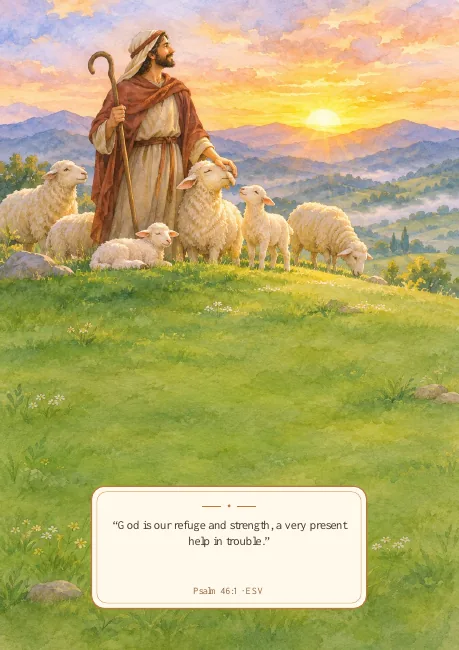 ESV · Printable set
Download 20 illustrated ESV verses about peace and comfort. Print them as keepsakes, memory verse cards or classroom resources.
Download the printable PDF ESV · Printable set
Download 20 illustrated ESV verses about courage and hope. Print them as keepsakes, memory verse cards or classroom resources.
Download the printable PDF ESV · Printable set
Download 20 illustrated ESV verses about faith and gratitude. Print them as keepsakes, memory verse cards or classroom resources.
Download the printable PDF