English Drills
Home › Teacher lessons › Blue Whales: Giants of the Ocean

Blue Whales: Giants of the Ocean

A complete A1 classroom lesson built around a short English reading. Use it as a 45–60 minute lesson, or choose individual sections for a shorter class.

A145–55 minutesScience & naturePrintable
Teacher lesson: Talk with a partner. What do you know about whales? Write two ideas. Work through the nine panels in order, or choose the sections that suit your class. Teacher answers and the listening script are stored separately.
Teacher AnswersOpen original reading
1 Lesson Goals
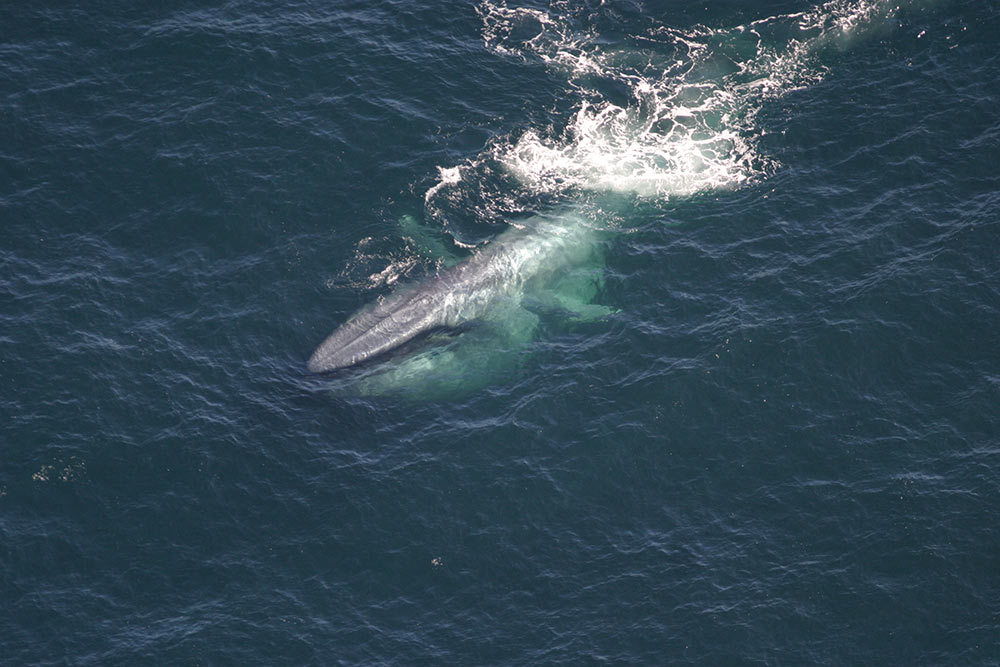
A blue whale swimming in the ocean

By the end of this lesson, I will be able to:

  • understand the main ideas and key details in Blue Whales: Giants of the Ocean.
  • learn and use important vocabulary from the lesson.
  • use the lesson language in speaking or writing.
Start here: What do you already know about this topic? Tell a partner one idea.
2 Reading
Before you read:

Talk with a partner. What do you know about whales? Write two ideas.

The blue whale is the largest animal known to have lived on Earth. It can grow to about 30 metres long. Blue whales live in oceans around the world. They are enormous, but they eat very small animals called krill. A blue whale can eat millions of krill in one day. Blue whales breathe air, so they must come to the surface. They make very loud sounds and can communicate across long distances underwater. In the past, people hunted many blue whales. Their numbers fell greatly. Today, blue whales are protected, but they still face dangers such as ship strikes, fishing gear and changes in the ocean.
3 Vocabulary
Word bank: enormous · krill · surface · protected · danger

Match each word to its meaning.

a. very big   b. safe because of rules or laws   c. the top of the water   d. something that can hurt you   e. very small sea animals

4 Check Your Understanding

1. How long can a blue whale grow?

2. What do blue whales eat?

3. Why must blue whales come to the surface?

4. What happened when people hunted many blue whales?

5. Write one danger blue whales face today.

5 Language Focus

Complete the sentences with can or cannot.

1. Blue whales grow to about 30 metres long.

2. Blue whales live underwater without coming up for air.

3. Blue whales communicate across long distances.

4. People hunt protected blue whales legally in most places.

6 Listen & Speak

Listen

Listen to your teacher and circle True or False.

1. Blue whales are the largest animals on Earth.   True / False

2. Blue whales live in only one ocean.   True / False

3. Blue whales eat fish and seals.   True / False

4. Blue whales come to the surface to breathe.   True / False

Speak

With a partner, take turns asking and answering.

• What is the most interesting fact in the reading?
• Would you like to see a blue whale? Why or why not?
• What can people do to protect ocean animals?

7 Use Your English

Something New

Write three true/false questions about blue whales. Test a partner, then swap quizzes.

Write

Write 4–5 sentences about blue whales. Use at least two words from the vocabulary box.

8 Puzzle or Game
Draw, Mime or Describe

Choose a useful word from this lesson. Do not say the word. Draw it, mime it, or describe it. Your partner has three guesses.

Swap roles and play again with a different word.

9 Success Criteria ✓

Tick each statement when you can do it.

  • I can explain the main idea of the lesson.
  • I can use at least three new words correctly.
  • I can complete the language task.
  • I can share an idea in spoken or written English.

One thing I am proud of today:

10 Show What You Can Do
My final challenge: Blue Whales: Giants of the Ocean

1. Draw or plan. Add a small picture, diagram or 4 key words from the lesson.

2. Write. Write 3–5 sentences using words or language from this lesson.

3. Share. Tell a partner or teacher one thing you can now say or understand.