Choosing a Day Trip
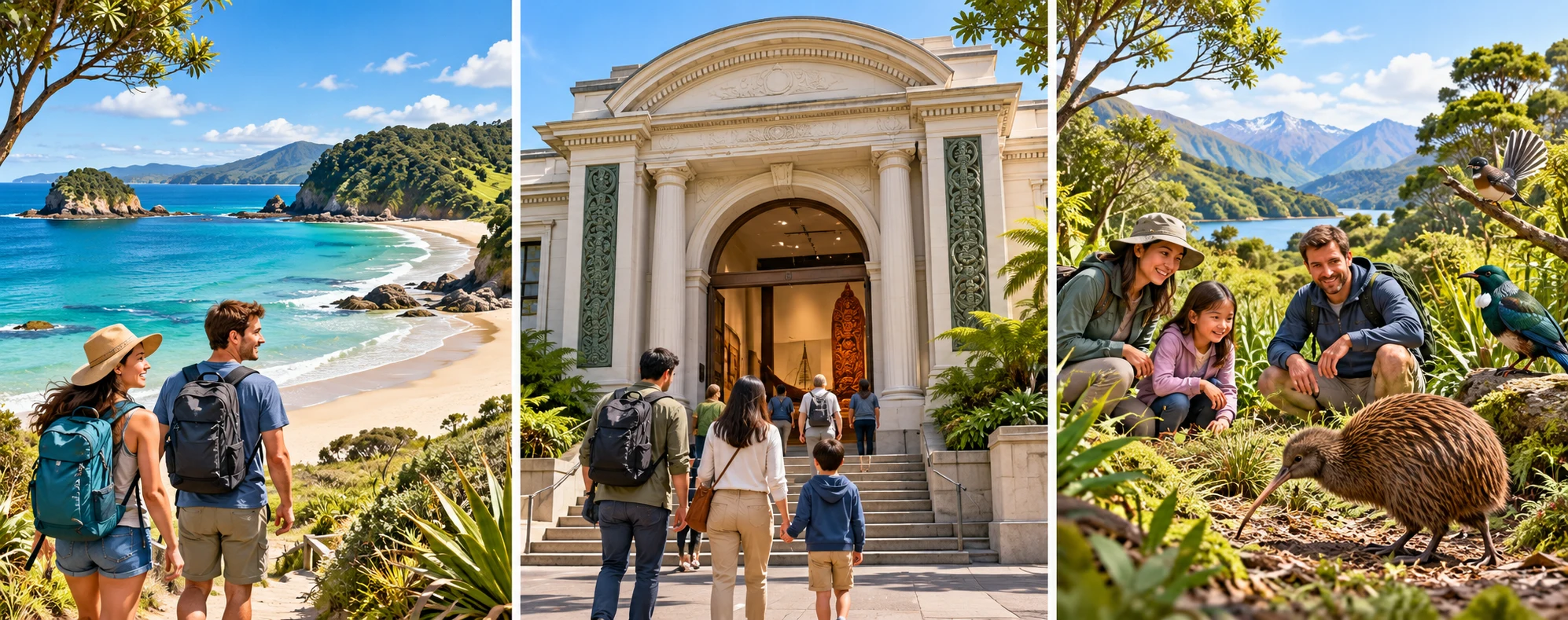
Original English Drills lesson. Listening uses a teacher-read script. Student print format: two A4 landscape sides.
1. Warmer
Look at the illustration. What can you see? Tell a partner two ideas.
Goal: Use comparatives and superlatives in everyday English.
2. Vocabulary
Match the words with their meanings.
1. choice
2. close
3. quiet
4. comfortable
5. expensive
A. with little noise
B. costing a lot of money
C. something you can select
D. pleasant and easy to be in
E. not far away
1 ___ 2 ___ 3 ___ 4 ___ 5 ___
3. Reading
Our class has three ideas for a day trip. The beach is twenty minutes away by bus, the museum is ten minutes away, and the wildlife park is forty minutes away. The museum is the closest place, and it is cheaper than the wildlife park. The beach is free, but a windy day can make it less comfortable. The wildlife park is more expensive than the museum, but some students think it is more exciting. Hana wants to see animals. Leo prefers the museum because it is quieter than the beach. The class is going to discuss the choices before deciding.
4. Comprehension
Answer using the reading.
- Which place is the closest?
- Which costs more: the museum or wildlife park?
- Why does Hana prefer the wildlife park?
- Why does Leo prefer the museum?
5. Grammar focus
Compare two: adjective-er + than, or more + adjective + than.
The museum is closer than the park.
The park is more expensive than the museum.
Compare a group: the closest; the most expensive.
Spelling: big → bigger; happy → happier.
Irregular: good → better → best.
6. Guided practice
Complete each sentence. Use the forms in brackets where given.
- The museum is ___ (close) than the park.
- The park is ___ (expensive) than the museum.
- The museum is the ___ (close) place.
- A sunny day is ___ (good) than a rainy day for the beach.
- This bag is ___ (big) than that bag.
- Of three tickets, this is the ___ (expensive).
Choosing a Day Trip — continued
7. Listening
Your teacher will read a short text twice. Complete the notes.
- Small café: ___
- Biggest café: ___
- River Café tea price: ___
- Cheapest tea: ___ Café
- Speaker’s favourite: ___ Café
8. Speaking
Ask a partner. Answer in full sentences.
- Which is bigger: your school or your home?
- Which is cheaper: a bus ticket or a taxi ride?
- What is the quietest place you know?
- What is the most interesting place you have visited?
Listen and ask one follow-up question.
9. Fun practice
Grammar detective: Correct one mistake in each sentence.
- This bag is more bigger.
- The park is expensive than the museum.
- She is the most tall student.
- This café is gooder than that one.
10. Writing and reflection
Compare three places you know in six sentences. Use two comparatives and two superlatives.
Exit check: big → ___ → the ___.
□ I can use the grammar. □ I can ask or answer a question.
Choosing a Day Trip — Teacher Answers
A2 · Comparatives and superlatives · 50–60 minutes
1. Warmer
Invite observations and connect the picture to the lesson topic. Answers vary. Introduce the target pattern before expecting independent use.
2. Vocabulary
1–C; 2–E; 3–A; 4–D; 5–B.
3–4. Reading and comprehension
- The museum.
- The wildlife park.
- She wants to see animals.
- It is quieter than the beach.
5–6. Grammar and guided practice
- closer
- more expensive
- closest
- better
- bigger
- most expensive
Accept equivalent full and contracted negative forms. Ask learners to explain their choices using the grammar panel.
7. Teacher-read listening script
Read twice at a natural, clear pace, with a pause between readings. Clarify vocabulary first if needed.
We are comparing three cafés. The Garden Café is smaller than the River Café. The Station Café is the biggest of the three. Tea at the Garden Café costs four dollars. At the River Café, it costs five dollars. At the Station Café, it costs six dollars. The Garden Café has the cheapest tea. My favourite is the River Café because it is quieter than the others.
- Garden Café
- Station Café
- five dollars / $5
- Garden
- River
8. Speaking
Personal answers vary. Allow pairs to rehearse. Monitor the target grammar and support follow-up questions with What, Where, When or Why as appropriate.
9. Grammar detective
- This bag is bigger.
- The park is more expensive than the museum.
- She is the tallest student.
- This café is better than that one.
10. Writing and reflection
Check that learners follow the writing task, use the target forms accurately and make complete sentences. Personal examples vary.
Exit answers: bigger; biggest.
Suggested timing and support
Warmer/vocabulary: 8 minutes; reading/comprehension: 10; grammar/practice: 12; listening: 7; speaking/game: 10; writing/reflection: 8. Give a word bank or sentence frames for support. For extension, ask pairs to create two more questions. All texts and activities are original English Drills material.