English Drills
Home › Teacher lessons › Connectors for Clear Writing

Connectors for Clear Writing

A complete A2 classroom lesson adapted from the EnglishDrills literacy-writing material and redesigned for the international EnglishDrills teacher-lesson format.

A245–55 minutesWriting & organisationPrintable
Teacher lesson: Look at the title and picture. What do you already know about this writing skill? Write two ideas, then compare with a partner. Work through the nine panels in order, or choose the sections that suit your class. Teacher answers and the listening script are stored separately.
Teacher AnswersBack to Teacher Lessons
1 Lesson Goals
Connectors for Clear Writing

By the end of this lesson, I will be able to:

  • understand the main ideas and key details in Connectors for Clear Writing.
  • learn and use important vocabulary from the lesson.
  • use the lesson language in speaking or writing.
Start here: What do you already know about this topic? Tell a partner one idea.
2 Reading
Before you read:

Look at the title and picture. What do you already know about this writing skill? Write two ideas, then compare with a partner.

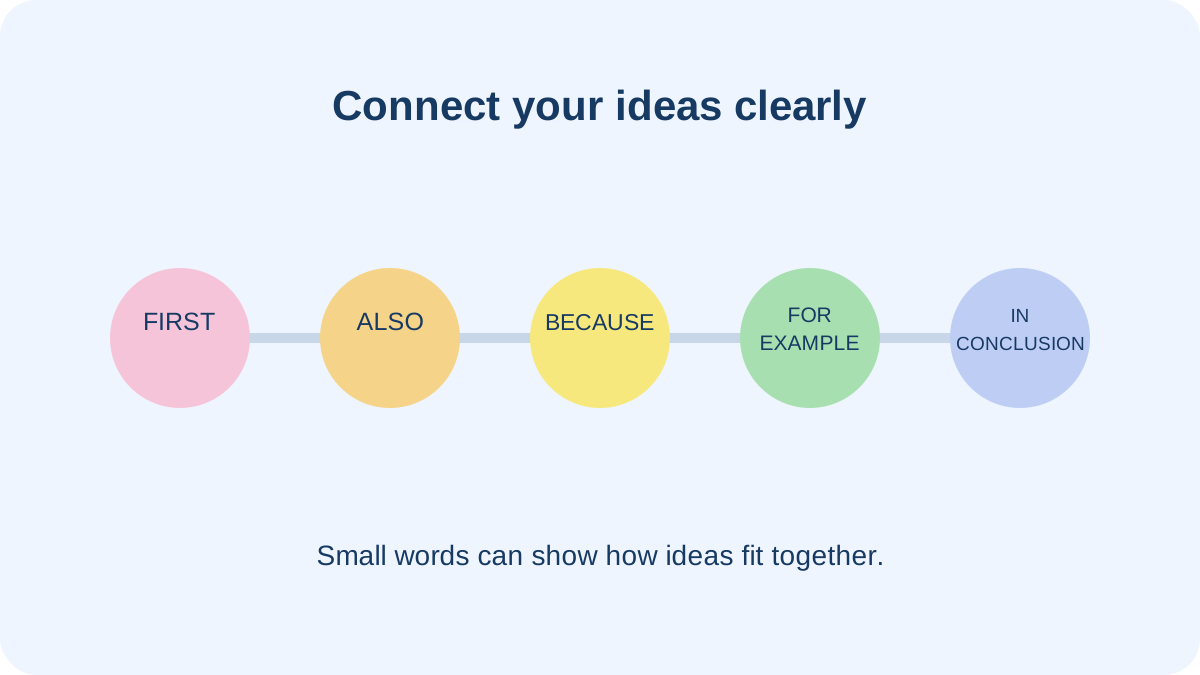
Connector words help readers follow our ideas. First can introduce the first point. Also adds another idea. Because gives a reason. For example introduces a supporting example. In conclusion helps finish a short opinion paragraph.

A paragraph does not need a connector in every sentence. Use them when they make the relationship between ideas clearer. Good writers choose simple connectors carefully instead of adding too many.
3 Vocabulary
Key words: connector · introduce · add · reason · conclusion

Write a short meaning or synonym for each word.

connector –

introduce –

add –

reason –

conclusion –

4 Check Your Understanding

1. What does a connector help the reader do?

2. Which connector adds another idea?

3. Which connector gives a reason?

4. Which phrase introduces an example?

5. Why should writers avoid too many connectors?

5 Language Focus

Choose the best connector for each sentence.

1. , school gardens can teach students about food. (First / Because)

2. Gardens are useful students can learn by doing. (because / in conclusion)

3. , students can grow vegetables together. (For example / Because)

4. , a school garden can be a valuable learning space. (In conclusion / Also because)

6 Listen & Speak

Listen

Listen to your teacher. You will hear the text twice. Answer the questions.

1. What topic is Noah writing about?

2. Which connector does he use first?

3. What example does he include?

4. How does he finish?

Speak

Discuss or practise with a partner.

• Explain one benefit of learning English using because.
• Add another benefit using also.
• Give an example using for example.

7 Use Your English

Something New

Write the five connectors on small cards or pieces of paper. In pairs, students pick a card and must say a sentence that uses that connector correctly.

Write

Write one short paragraph of 80–100 words about a useful school activity. Use at least four of these: first, also, because, for example, in conclusion.

8 Puzzle or Game
Memory Challenge

Close or cover the Vocabulary panel. In 45 seconds, write as many lesson words as you can remember. Then check your spelling.

Score: ____ words remembered correctly.

Use your best word in a sentence.

9 Success Criteria ✓

Tick each statement when you can do it.

  • I can explain the main idea of the lesson.
  • I can use at least three new words correctly.
  • I can complete the language task.
  • I can share an idea in spoken or written English.

One thing I am proud of today:

10 Show What You Can Do
My final challenge: Connectors for Clear Writing

Plan: Write 5 useful words or ideas from the lesson, or make a quick labelled sketch.

Write: Write 5–7 sentences that show what you learned. Try to use at least 3 words from the Vocabulary panel.

Share: Explain your work to a partner for about 30 seconds.