1Lesson Goals
I will be able to:
- retell a short classic story.
- use words about a mystery.
- use past simple verbs.
- give a reason for an opinion.
Remember and Use — 3 minutes
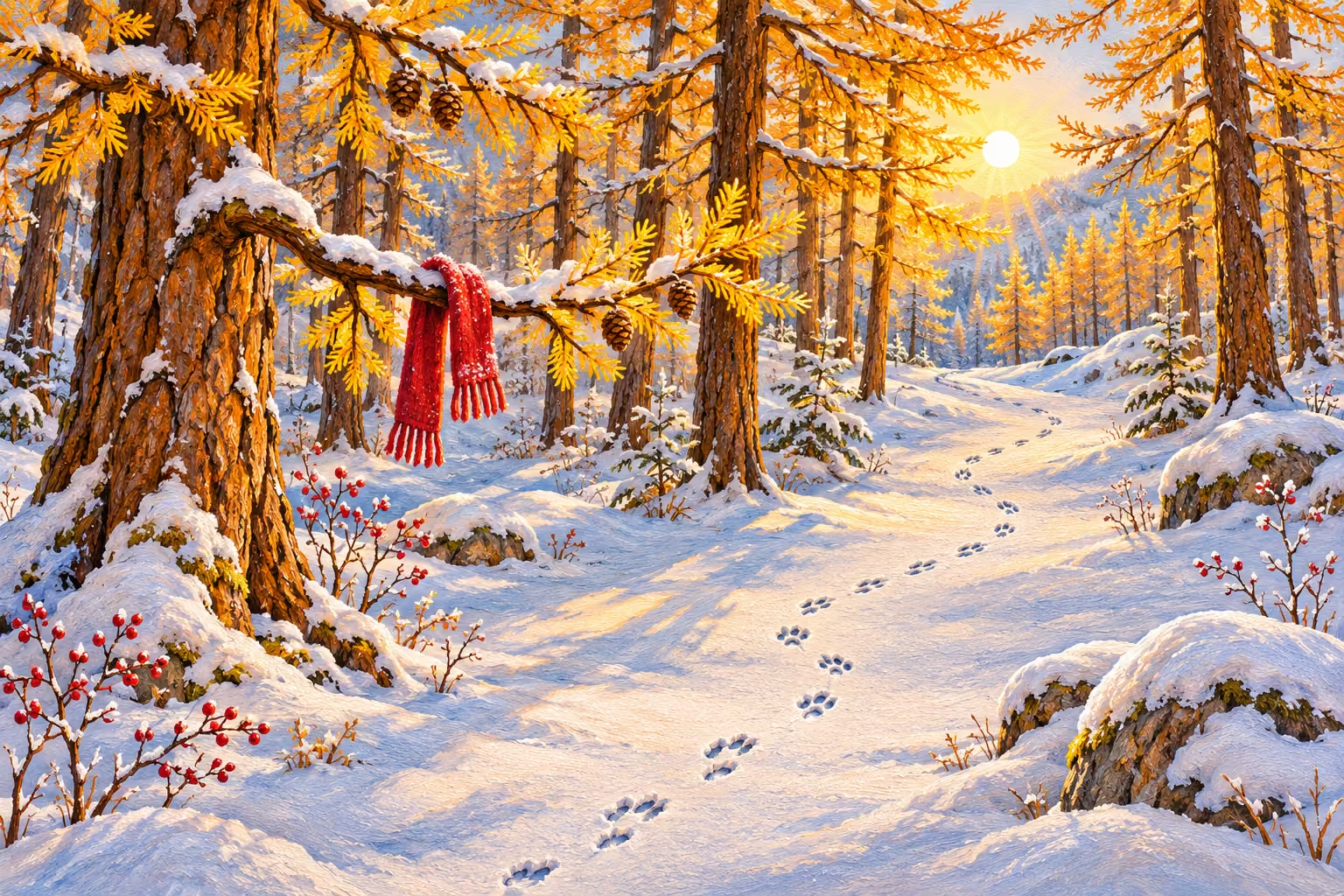
Describe the picture. What made these marks? Share your idea with a partner.
Choose Colour, Black & White or Economy / Low Ink. To save a PDF, select “Save as PDF” in your browser’s print window. For two-sided printing, use A4 landscape and flip on the short edge.
Open teacher answersA. A. Milne · Friendship, imagination and a snowy mystery
Name: ____________________________ Date: ________________ Student worksheet · 1 / 2
I will be able to:
Remember and Use — 3 minutes
Describe the picture. What made these marks? Share your idea with a partner.
Winnie-the-Pooh is a book by A. A. Milne, first published in 1926. Pooh is a bear who loves honey. His friends include Piglet and a boy called Christopher Robin. Their small adventures often become funny mysteries.
One winter day, Pooh walked in a circle in the snow. He saw some tracks and wanted to discover which animal had made them. Piglet came to look. Perhaps, they thought, the animal was a Woozle.
Pooh and Piglet followed the tracks around a small group of trees. They found more marks each time they went around. They thought more animals were joining the first one. Piglet became worried. What if the animals were dangerous?
Christopher Robin was watching from a tree. He explained the mystery: Pooh had been following his own footprints. When Piglet joined him, Piglet made more tracks too. There were no strange animals to catch.
The joke is that the reader can understand the mistake before Pooh does. The story also gives us something to discuss: when we feel afraid, it can help to stop and look carefully.
Simplified retelling of Chapter III; not a quotation. The final paragraph offers an interpretation. Read the original book. Woodland image generated with AI.
Read the additional reading sheet.
Read the text after the two activity pages. Underline details that support your answers.
Reading notes
| Word or phrase | Meaning or clue |
|---|---|
A detail to remember:
Match 1–6 with A–F.
A. to go after someone or something
B. marks left by feet
C. something difficult to explain
D. marks left by a person or animal
E. to find out something new
F. feeling afraid about a possible problem
Use two words in sentences.
Answer in sentences. Use the reading to help you.
Past simple: Use it for finished events.
Regular: walk → walked. Irregular: see → saw.
Complete with the past simple.
Your turn: Write one thing you did yesterday.
Listen: Your teacher will read a short version twice. Cover the reading sheet.
First time: What was the real mystery?
Second time: Listen for these details.
Discuss: Why is the ending funny? Describe a small mistake you can laugh about now.
Useful language: I think… because… / First… Then… Finally…
Name: ____________________________ Date: ________________ Student worksheet · 2 / 2
Write 50–70 words. Choose one:
Use first, then, finally, three past simple verbs and two lesson words.
Put the events in order. Write A–E.
A. Christopher Robin explained the tracks.
B. Piglet joined Pooh.
C. Pooh saw tracks in the snow.
D. Pooh understood his mistake.
E. The friends found more marks and felt worried.
Retell the story using your order.
Exit reflection: One thing I learnt…
One thing I want to practise…
Improve: Reread your writing from panel 7. Check past simple verbs, capitals and full stops. Write an improved version here or on another sheet.
Share: Tell a partner what you changed and why.
Winnie-the-Pooh is a book by A. A. Milne, first published in 1926. Pooh is a bear who loves honey. His friends include Piglet and a boy called Christopher Robin. Their small adventures often become funny mysteries.
One winter day, Pooh walked in a circle in the snow. He saw some tracks and wanted to discover which animal had made them. Piglet came to look. Perhaps, they thought, the animal was a Woozle.
Pooh and Piglet followed the tracks around a small group of trees. They found more marks each time they went around. They thought more animals were joining the first one. Piglet became worried. What if the animals were dangerous?
Christopher Robin was watching from a tree. He explained the mystery: Pooh had been following his own footprints. When Piglet joined him, Piglet made more tracks too. There were no strange animals to catch.
The joke is that the reader can understand the mistake before Pooh does. The story also gives us something to discuss: when we feel afraid, it can help to stop and look carefully.
Simplified retelling of Chapter III; not a quotation. The final paragraph offers an interpretation. Read the original book. Woodland image generated with AI.
When you have finished this activity, mark it complete.
I’ve finished this activity ✓