1Lesson Goals
I will be able to:
- put instructions in a logical order.
- use action verbs and sequence words.
- write a short set of clear instructions.
Start here: What happens if instructions miss an important step?
Writing · Order and action verbs
I will be able to:
Start here: What happens if instructions miss an important step?
Clear instructions help another person complete a task. They explain what to use and what to do, in the order the actions need to happen. A useful title tells the reader the goal. A short list of materials helps the reader get ready.
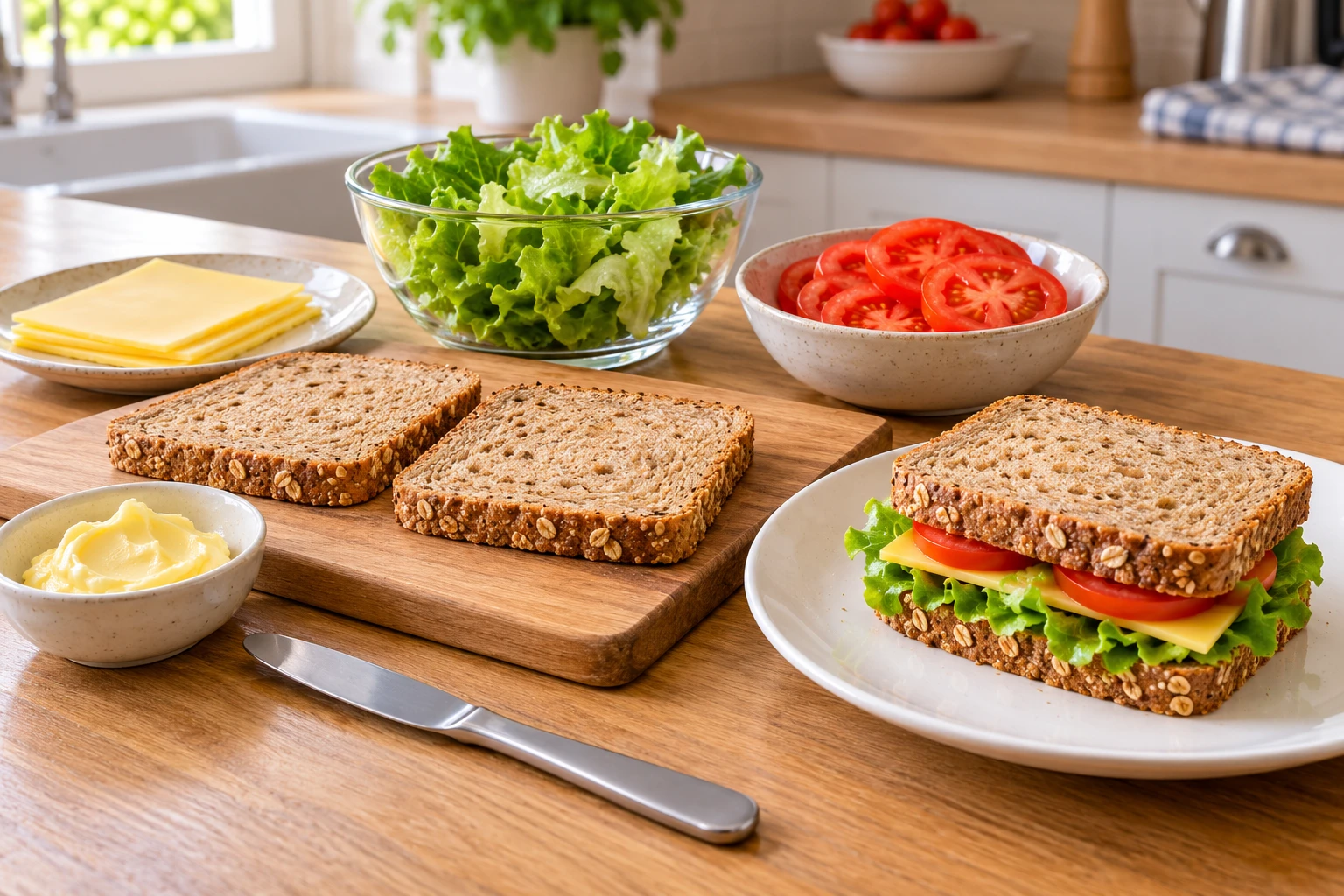
For example, the title could be “How to Make a Cheese and Salad Sandwich”. You need two slices of bread, butter, cheese, washed lettuce and tomato. You also need a clean plate and a butter knife.
First, wash your hands and prepare a clean work area. Next, put the bread on the plate. Spread a little butter on one side of each slice. Then, put cheese, lettuce and sliced tomato on one slice. After that, place the other slice on top. Finally, serve your sandwich.
Instructions often begin with an action verb, such as put, spread or place. These verbs tell the reader exactly what to do. Sequence words, such as first and finally, show the order.
Before you finish, read your instructions again. Imagine you have never done the task before. Is each step clear? Have you included everything the reader needs?
Match 1–6 with A–F.
A. to put a thin layer over a surface
B. the order in which things happen
C. a thin piece cut from something
D. directions explaining how to do something
E. to give someone food ready to eat
F. things needed for a task
Use two words in your own sentences.
Answer in sentences. Use the reading.
Imperatives: begin with the base verb: Put the bread on a plate.
Negative instructions: Don’t + base verb: Don’t forget a title.
Choose the correct form.
Listen: Your teacher will read a short script twice. Answer these questions.
Then discuss with a partner:
Try: I think… because… / We could… / What do you think?
How to Write Instructions — continued
Write instructions for making a sandwich or packing a school bag. Include a title, a materials list and five steps. Begin each step with an action verb and use sequence words.
Plan your ideas, then write.
Check capitals, punctuation and verb forms.
Mixed-up sandwich: Put these steps in order.
A. Place the other slice on top.
B. Spread butter on the bread.
C. Wash your hands and prepare the work area.
D. Serve the sandwich.
E. Put cheese, lettuce and tomato on one slice.
F. Put the bread on the plate.
Exit reflection: One thing I learned…
One thing I want to practise…
Final challenge: Explain a familiar task in five steps. Your partner should identify the materials and follow the order using words or gestures. Improve one unclear step after their feedback.