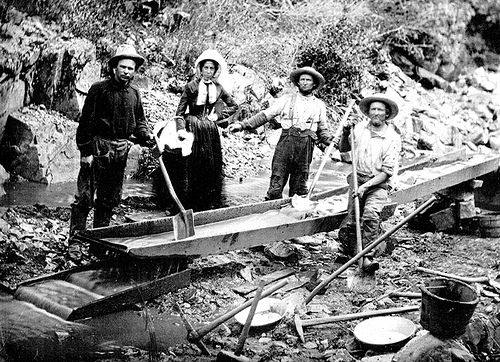
By the end of this lesson, I will be able to:
- understand the main ideas and key details in The California Gold Rush.
- learn and use important vocabulary from the lesson.
- use the lesson language in speaking or writing.
A complete B1 classroom lesson built around an engaging topic. Use it as a 45–60 minute lesson, or choose individual sections for a shorter class.

By the end of this lesson, I will be able to:
Look at the picture and title. What do you already know about this topic? Write two ideas, then compare with a partner.
Write a short meaning or synonym for each word.
migrant –
mining camp –
wealthy –
displacement –
accelerate –
1. Where was gold found in 1848?
2. Why did many people move to California?
3. What were the migrants called?
4. Did most miners become wealthy?
5. Name one serious consequence of the Gold Rush.
Complete with the best tense.
1. People (travel) west when news of gold (spread).
2. While miners (search) for gold, new towns (grow).
3. Businesses (sell) supplies while thousands of migrants (arrive).
4. Prices (rise) as the population (increase).
Listen
Listen to your teacher. You will hear the text twice. Answer the questions.
1. Which city changed quickly?
2. What arrived by ship?
3. What happened to the population?
4. How did some people make money without mining?
Speak
Discuss with a partner or small group.
• Why do people move when they hear about new opportunities?
• What problems can very rapid population growth create?
• Is taking a big financial risk ever sensible?
Something New
Create one Gold Rush job card. Then role-play a job fair: explain the job and persuade a partner to apply.
Write
Write 100–130 words describing both opportunities and problems created by the California Gold Rush.
Write three short statements about the Reading panel. Make two true and one false. Read them to a partner. Can your partner find the trick?
Tick each statement when you can do it.
Plan: Note your strongest idea, 3 useful words or phrases, and one supporting detail from the lesson.
Respond: Write a short paragraph of 6–8 sentences, or prepare a 45-second spoken response, showing what you learned.
Reflect: Underline the part of your response that best shows your progress.