English Drills
Home › Classic Literature › Hope is the Thing with Feathers

Hope is the Thing with Feathers

A short, uplifting poem about hope, nature and inner strength by Emily Dickinson

B150–60 minutesClassic LiteraturePrintable
Teacher lesson: Introduce the bird as a metaphor for hope. Read aloud once, then let students read quietly. Accept interpretations supported by evidence. Preview the full poem for your class and use fictional examples for personal-response tasks. Teacher answers are stored separately.
Teacher AnswersClassic Literature
1 Lesson Goals
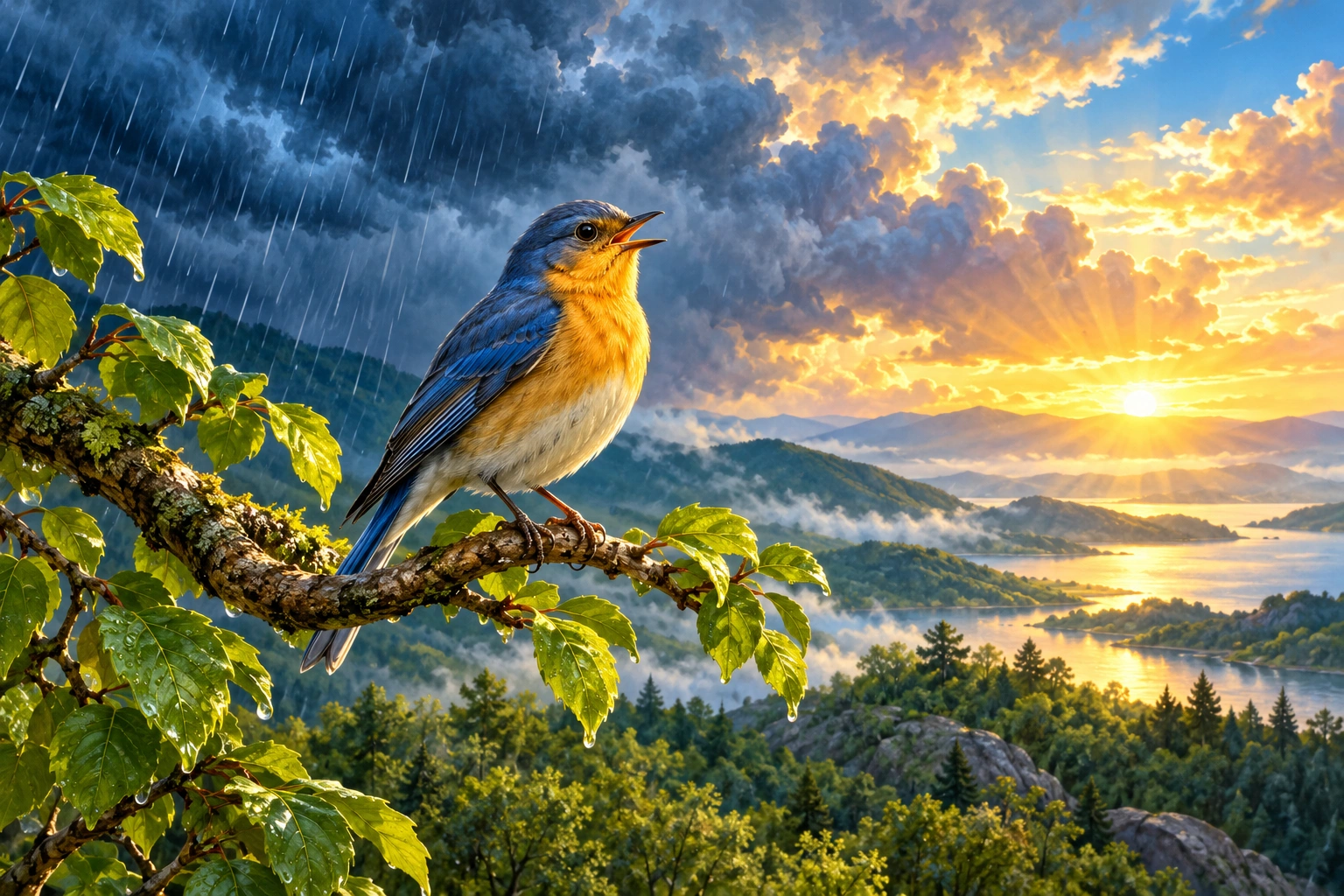
AI illustration of a golden-breasted songbird singing as a storm gives way to sunlight

By the end of this lesson, I will be able to:

  • explain the poem’s main idea.
  • use new words about birds and weather.
  • explain a metaphor and personification.
  • write a response about hope.
Start here: How might a small bird represent a powerful feeling? Look at the picture and predict.
2 Read the Poem

Hope is the Thing with Feathers
Emily Dickinson

Hope is the thing with feathers
That perches in the soul,
And sings the tune without the words,
And never stops at all,

And sweetest in the gale is heard;
And sore must be the storm
That could abash the little bird
That kept so many warm.

I’ve heard it in the chillest land,
And on the strangest sea;
Yet, never, in extremity,
It asked a crumb of me.

First reading: Listen as your teacher reads. What feeling does the poem leave you with?

Second reading: Circle words connected with the bird. Underline words describing difficult conditions.

Public-domain text from the Academy of American Poets. Other editions may use different punctuation.
3 Vocabulary

Match 1–6 with A–F. Use the poem to help you.

1. perches
2. gale
3. abash
4. chillest
5. extremity
6. crumb

A. a very small piece of food
B. make someone feel embarrassed or lose confidence
C. sits or rests on something
D. a situation of extreme difficulty
E. coldest
F. a very strong wind

Older language: Here, sore suggests severe, and soul refers to a person’s inner life.

Use two vocabulary words in your own sentences.

4 Check Your Understanding
  1. What does the bird represent?
  2. Where does it perch? What might this suggest?
  3. When is its song heard most sweetly?
  4. What might the storm represent?
  5. How does the bird help people?
  6. What does it ask for in return?
  7. Is the poem mainly about a real bird? Explain.

Answer in your own words. Support two answers with details from the poem.

5 Language & Poetry

Poetry detective: Find evidence for each idea.

  • Extended metaphor: hope is presented as a bird throughout the poem.
  • Personification: the bird is described as asking for something, like a person.
  • Imagery: weather and sound help readers imagine the experience.

Discuss: Why might a storm be a good image for difficulty?

Original language practice: Join each pair using although.

  1. The storm is strong. The bird keeps singing.
  2. The journey is difficult. We remain hopeful.
  3. The bird is small. Its song gives comfort.
6 Think & Speak

Discuss in pairs. Give reasons.

  • Why might Dickinson choose a small bird to represent hope?
  • Can something gentle also be strong?
  • What other object could symbolise hope?
  • Which image or sound in the poem stays with you?
Useful frames: The bird could represent… / This detail suggests… / I agree because… / Another interpretation is…

You may use imagined situations or examples from books.

7 Use Your English

Choose one task. Write 100–120 words, or a short original poem.

  • Explain how Dickinson uses the bird and weather to explore hope.
  • Write a story about someone who stays hopeful during a difficult day.
  • Write a poem comparing hope to an object from nature.

Use your own words and at least two new vocabulary words. Check sentences, spelling and punctuation.

8 Puzzle or Game
Symbol detectives:

Each group chooses a natural object to represent hope and draws it without writing the word hope. Other groups guess the object and explain the connection. Give one point for a clear symbol and one for a thoughtful explanation.

Extension: Invent one sentence that develops your metaphor.

9 Success Criteria ✓

Tick each statement when you can do it.

  • I can summarise the central idea.
  • I can use three new vocabulary words.
  • I can explain the bird metaphor.
  • I can support an interpretation with evidence.

One idea I will remember:

10 Show What You Can Do

Plan: Note your main idea, two details from the poem and one technique.

Respond: Write 6–8 sentences, or prepare a 45-second spoken response: How does Dickinson suggest that hope can survive difficult times?

Reflect: Underline the evidence that best supports your explanation.