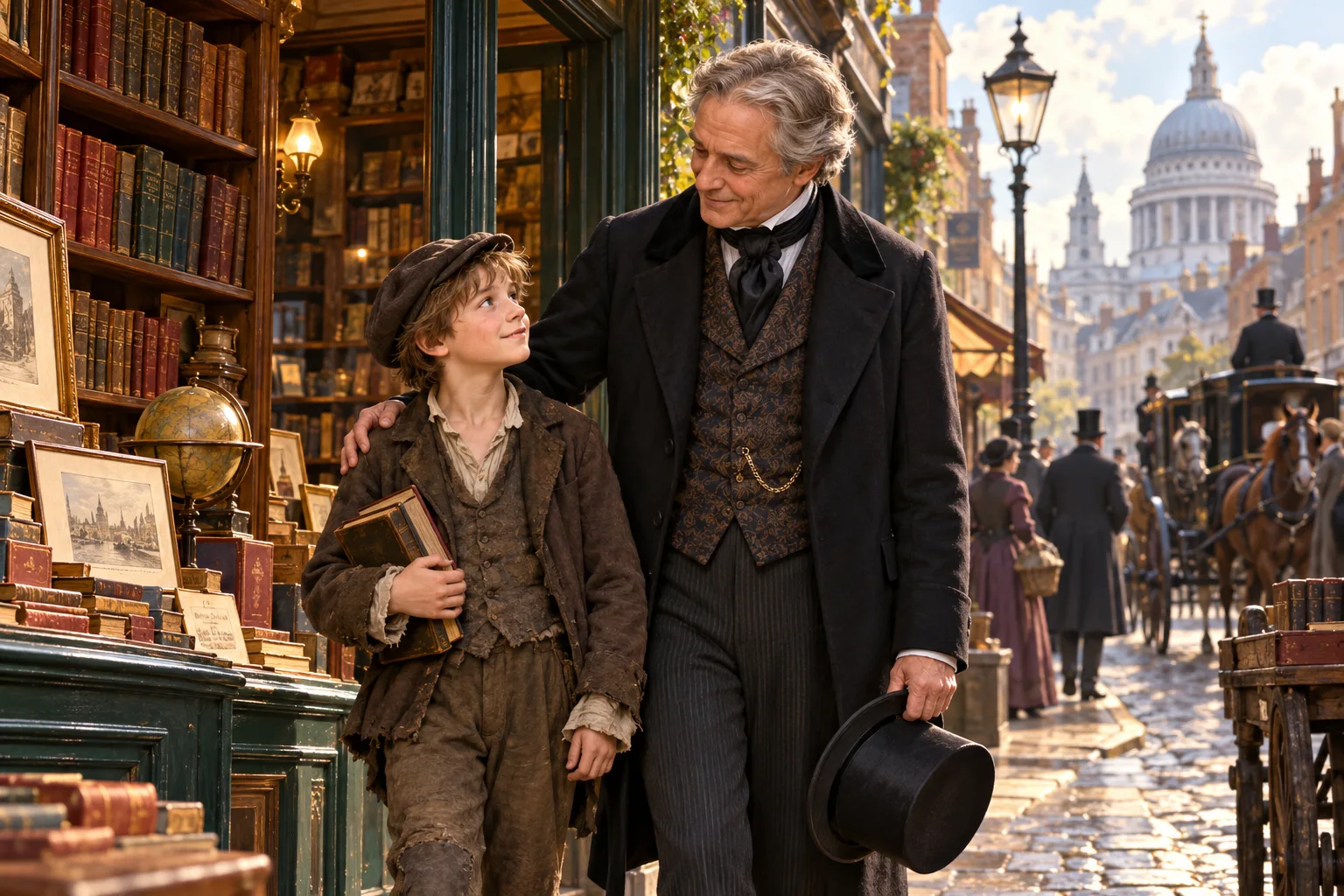
Oliver Twist is a boy without parents who grows up in a workhouse. In nineteenth-century England, workhouses provide basic food and shelter for poor people, but conditions can be harsh. Oliver and the other children are hungry. When he asks for more food, the adults punish him instead of helping.
After another unhappy placement, Oliver runs away to London. There he meets the Artful Dodger, a boy who takes him to Fagin. Oliver thinks he has found people who will care for him. However, Fagin trains children to steal, and Oliver is placed in danger.
One day, Oliver goes out with two boys who steal from Mr Brownlow. Oliver does not steal, but he is blamed and taken before a magistrate. A witness explains what happened. Mr Brownlow then takes Oliver home and cares for him.
Oliver is later forced back among the criminals. Nancy, a young woman in the group, decides to help him despite the danger to herself. Other people, including Rose Maylie, also try to protect him. Secrets about Oliver’s family gradually become clear.
At the end, Mr Brownlow adopts Oliver, giving him a safe home. The novel criticises cruelty towards poor children. It also shows that kindness requires action: people must notice unfair treatment and do something about it.
Original simplified overview; not a quotation. Read the original novel. AI illustration.
Read the additional reading sheet.
The complete text appears after the two activity pages. Read it before answering the reading questions.
As you read, underline details that support your answers. Use the vocabulary panel to help with unfamiliar words.