English Drills
Home › Classic Literature › Romeo and Juliet

Romeo and Juliet

A tragic love story by William Shakespeare

B150–60 minutesClassic LiteraturePrintable
Teacher lesson: Begin with the reading and a quick discussion. Work through the nine panels in order, or choose the sections that suit your class. Teacher answers are stored separately.
Teacher AnswersClassic Literature
1 Lesson Goals
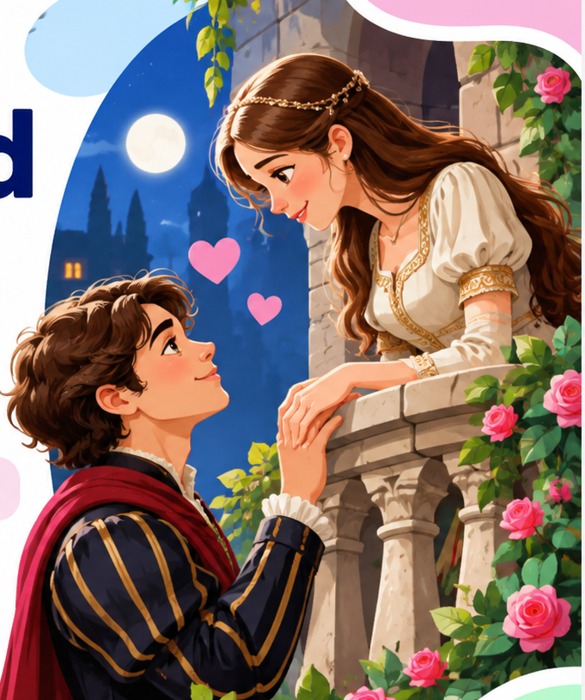
Romeo and Juliet at the balcony

By the end of this lesson, I will be able to:

  • understand the main ideas and key details in Romeo and Juliet.
  • learn and use important vocabulary from the lesson.
  • use the lesson language in speaking or writing.
Start here: What do you already know about this topic? Tell a partner one idea.
2 Reading

Before you read: What do you already know about Romeo and Juliet?

Romeo and Juliet is one of William Shakespeare’s most famous plays. It is set in Verona, Italy. Two families, the Montagues and the Capulets, have been enemies for many years.

Romeo, a Montague, meets Juliet, a Capulet, at a party. They fall in love very quickly, but they must keep their relationship secret because their families are rivals.

With the help of Friar Laurence, they marry in secret. Trouble grows when Tybalt kills Mercutio and Romeo kills Tybalt. Romeo is then banished from Verona.

Juliet drinks a potion so she appears dead, but Romeo does not receive the message explaining the plan. Believing Juliet is truly dead, Romeo kills himself. Juliet wakes, sees Romeo dead, and also dies. In the end, the two families finally end their feud.
3 Vocabulary

Match each word to the best meaning.

1. feud
2. tragedy
3. banished
4. potion
5. dagger
6. reconcile
a. a drink or liquid with a special effect
b. a serious play or story with a sad ending
c. sent away as a punishment
d. to become friendly again after an argument
e. a long and bitter conflict
f. a short knife
4 Check Your Understanding

Answer the questions.

  1. Where does the story take place?
  2. Why must Romeo and Juliet keep their love secret?
  3. Who kills Mercutio?
  4. Why does Juliet drink the potion?
  5. What finally ends the family feud?
5 Language Focus

Choose the correct form.

  1. Romeo and Juliet met / were met at a party.
  2. They married / were married in secret by Friar Laurence.
  3. Mercutio was killed / killed by Tybalt.
  4. Romeo was banished / banished from Verona.
  5. Juliet drank / was drunk a sleeping potion.
6 Listen & Speak

Listen

Discuss in pairs or small groups.

  • Was it true love, or did Romeo and Juliet act too quickly?
  • Which character made the biggest mistake?
  • Could the tragedy have been prevented? How?
  • Why do family conflicts sometimes affect innocent people?

Speak

Match each character to the best description.

A. Romeo
B. Juliet
C. Mercutio
D. Tybalt
E. Friar Laurence
1. Juliet’s cousin, hot-tempered and proud
2. Tries to help the couple with a secret plan
3. Romeo’s lively and loyal friend
4. A young Montague who falls in love
5. A young Capulet who challenges her family

Choose two characters and write one adjective for each.

7 Use Your English

Something New

Balcony Scene Text Messages

Work with a partner. Imagine Romeo and Juliet can send text messages. Write 4–6 short messages for the famous balcony scene. Then perform your modern version for the class.

Write

Write 100–120 words on one topic.

  • Juliet’s diary after meeting Romeo.
  • A different ending where Romeo receives the message.
  • Advice for Romeo and Juliet before they marry.
8 Puzzle or Game
60-Second Word Race

In one minute, write as many English words as you can that connect with Romeo and Juliet. Compare your list with a partner.

Circle three words you think are especially useful.

9 Success Criteria ✓

Tick each statement when you can do it.

  • I can explain the main idea of the lesson.
  • I can use at least three new words correctly.
  • I can complete the language task.
  • I can share an idea in spoken or written English.

One thing I am proud of today:

10 Show What You Can Do
Final challenge: Romeo and Juliet

Plan: Note your strongest idea, 3 useful words or phrases, and one supporting detail from the lesson.

Respond: Write a short paragraph of 6–8 sentences, or prepare a 45-second spoken response, showing what you learned.

Reflect: Underline the part of your response that best shows your progress.