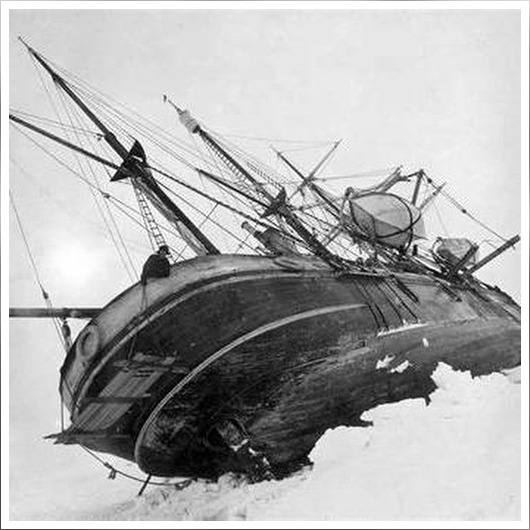
By the end of this lesson, I will be able to:
- understand the main ideas and key details in Shackleton and the Endurance.
- learn and use important vocabulary from the lesson.
- use the lesson language in speaking or writing.
A complete B1 classroom lesson built around a short English reading. Use it as a 45–60 minute lesson, or choose individual sections for a shorter class.

By the end of this lesson, I will be able to:
Imagine your group is stranded in a very cold place. Choose the three most important things to protect: food, water, shelter, communication, transport, tools. Explain your choices.
Use context from the reading to explain each word in your own words.
1. Why could the crew not simply sail home?
2. What happened to Endurance?
3. Why was Elephant Island not the end of the problem?
4. What did Shackleton and five companions do?
5. Which qualities helped the crew survive? Give evidence from the text.
Complete with the best form of the verb.
1. The crew (live) beside the ship while the ice (carry) them across the sea.
2. The men (protect) their equipment while they (face) extreme cold.
3. When the ice (break) apart, the crew (reach) Elephant Island.
4. Shackleton (sail) to South Georgia because the crew (need) help.
Listen
Listen to your teacher and answer the questions.
1. In which sea was Endurance trapped?
2. What did the crew protect after the ship was crushed?
3. Where did Shackleton sail to find help?
4. Did every crew member survive?
Speak
Discuss in groups.
• What makes someone a good leader in an emergency?
• Is careful preparation more important than courage? Why?
• What decisions in the reading seem especially important?
Something New
One student is a reporter and one is a rescued crew member. Ask and answer three questions about the rescue, then swap roles.
Write
Write 100–130 words: What can modern teams learn from the Endurance crew? Refer to at least two details from the reading.
Choose a useful word from this lesson. Do not say the word. Draw it, mime it, or describe it. Your partner has three guesses.
Swap roles and play again with a different word.
Tick each statement when you can do it.
Plan: Note your strongest idea, 3 useful words or phrases, and one supporting detail from the lesson.
Respond: Write a short paragraph of 6–8 sentences, or prepare a 45-second spoken response, showing what you learned.
Reflect: Underline the part of your response that best shows your progress.