By the end of this lesson, I will be able to:
- understand the main ideas and key details in The Story of the Titanic.
- learn and use important vocabulary from the lesson.
- use the lesson language in speaking or writing.
A complete B1 classroom lesson with the EnglishDrills nine-colour lesson sequence.

By the end of this lesson, I will be able to:
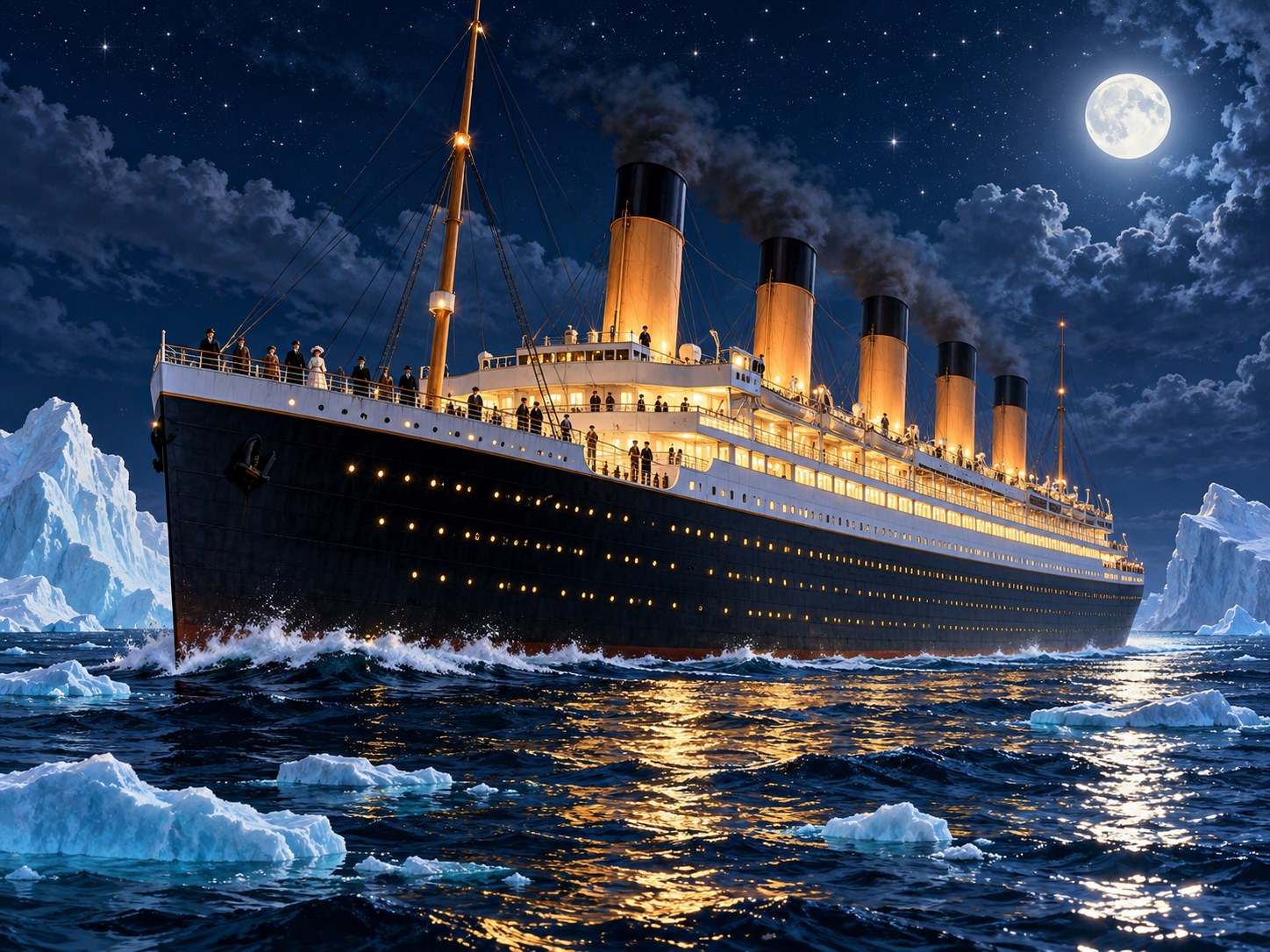
Look at the picture and title. What do you already know? Discuss with a partner and write two ideas.
Write a short meaning or example for each word.
voyage –
iceberg –
hull –
lifeboat –
maritime –
1. What is the main topic of the reading?
2. Write one important detail from the reading.
3. What happens or is explained next?
4. Which detail did you find most interesting?
5. What can we learn from this topic?
Choose the correct past simple or past continuous form.
1. The ship (travel) towards New York when it (strike) an iceberg.
2. Passengers (sleep) when the collision (happen).
3. Crew members (help) people while water (enter) the ship.
Listen
Listen to your teacher. You will hear the text twice. Answer the questions.
1. Where was the Titanic travelling?
2. What did it hit?
3. Why was evacuation difficult?
4. What changed after the disaster?
Speak
Discuss with a partner.
• What was new or surprising?
• How does this topic connect with real life?
• What question would you like to ask about it?
Something New
In groups, prepare a 30-second radio news report from the morning after the sinking. Include what happened, where and one safety concern.
Write
Write 100–120 words explaining what happened to the Titanic and one lesson learned from the disaster.
Close or cover the Vocabulary panel. In 45 seconds, write as many lesson words as you can remember. Then check your spelling.
Score: ____ words remembered correctly.
Use your best word in a sentence.
Tick each statement when you can do it.
Plan: Note your strongest idea, 3 useful words or phrases, and one supporting detail from the lesson.
Respond: Write a short paragraph of 6–8 sentences, or prepare a 45-second spoken response, showing what you learned.
Reflect: Underline the part of your response that best shows your progress.