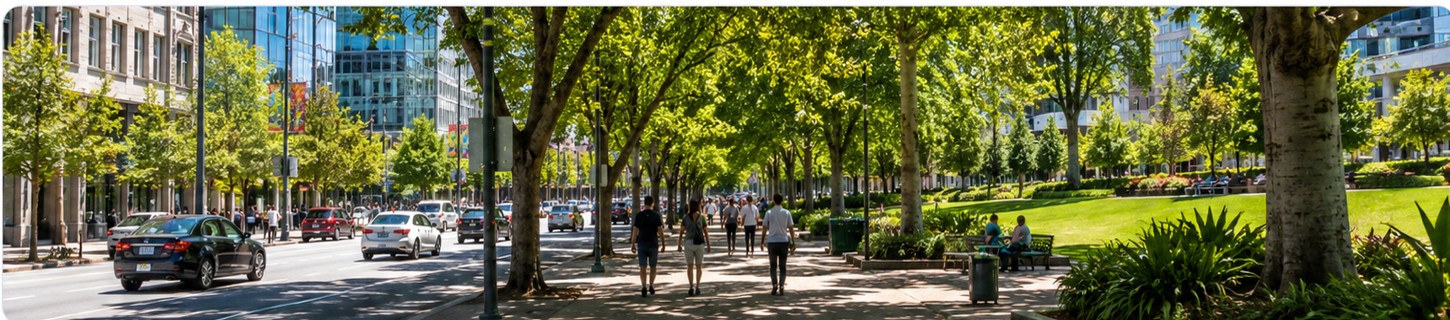
By the end of this lesson, I will be able to:
- understand the main ideas and key details in Urban Trees and City Life.
- learn and use important vocabulary from the lesson.
- use the lesson language in speaking or writing.
A complete B1 classroom lesson designed in the EnglishDrills teacher-lesson format.

By the end of this lesson, I will be able to:
Look at the title. What do you already know about this topic? Write two ideas, then compare with a partner.
Write a short meaning or synonym for each word.
urban –
shade –
particles –
wellbeing –
maintenance –
1. Name two ways trees can cool a city.
2. How can trees improve air quality?
3. How may green spaces affect people?
4. Why can tree roots cause problems?
5. What does a healthy urban forest depend on?
Complete each sentence with a, the or no article (Ø).
1. trees can reduce summer heat.
2. A city needs long-term plan for tree care.
3. plan should include suitable species.
4. Trees can improve air quality.
Listen
Listen to your teacher. You will hear the text twice. Answer the questions.
1. What do some cities map?
2. What three kinds of information may be recorded?
3. Why do workers use the information?
4. How can records help planners?
Speak
Discuss with a partner or small group.
• Which places in your town need more trees?
• What problems can badly chosen trees cause?
• Should cities spend more money on green spaces? Why?
Something New
In pairs, redesign a hot city street. You may add only three improvements. Agree on them and explain your choices to another pair.
Write
Write 120–150 words explaining how urban trees can improve city life and what planners need to consider.
In one minute, write as many English words as you can that connect with Urban Trees and City Life. Compare your list with a partner.
Circle three words you think are especially useful.
Tick each statement when you can do it.
Plan: Note your strongest idea, 3 useful words or phrases, and one supporting detail from the lesson.
Respond: Write a short paragraph of 6–8 sentences, or prepare a 45-second spoken response, showing what you learned.
Reflect: Underline the part of your response that best shows your progress.