By the end of this lesson, I will be able to:
- understand the main ideas and key details in Articles in Academic Reading.
- learn and use important vocabulary from the lesson.
- use the lesson language in speaking or writing.
A B2 lesson created for EnglishDrills article practice, focusing on how a/an, the and no article guide meaning across academic-style texts.
By the end of this lesson, I will be able to:
Look at these noun phrases. Which sound general and which sound specific?
universities · a university · the university · research · the research
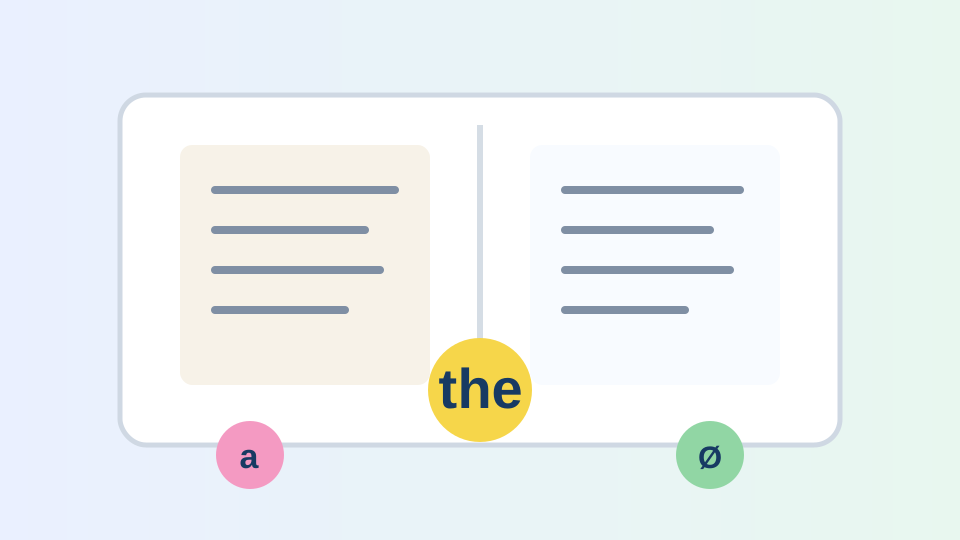
Academic English often uses articles to show whether an idea is general, new or already known. Compare these examples: Universities play an important role in society. Here, universities means universities in general, so no article is used. In A university in our city has opened a new research centre, the writer introduces one university for the first time. Later, the writer can say the university because the reader now knows which one.
Uncountable nouns also need careful attention. We often say research is important when we mean research in general. However, the research in this report refers to a particular body of research. The article helps narrow the meaning.
Strong readers notice these choices because articles connect sentences. Strong writers use them to guide the reader from a general idea to a specific example and then back to the larger topic.
Write the best word beside each meaning.
1. Why is there no article before universities in the first example?
2. Why can the writer change from a university to the university?
3. How does the research in this report differ from research is important?
Write a/an, the or Ø (no article).
Listen
Listen and write the missing article: a/an, the or Ø.
Speak
Explain the difference in meaning in each pair.
Something New
Find or write a short academic-style paragraph of three sentences. Circle every article. Draw an arrow from each the phrase to the earlier word, phrase or context that makes it specific.
Write
Write 100–120 words about one change that could improve education, transport or the environment. Start with a general idea, introduce one specific example with a/an, and refer back to it with the.
Choose four words from the Vocabulary panel. Write a short clue for each word without writing the word itself. Swap with a partner and see how many you can guess.
Bonus: Use one of the words in a new sentence.
Tick each statement when you can do it.
Plan: Note your strongest idea, 3 useful words or phrases, and one supporting detail from the lesson.
Respond: Write a short paragraph of 6–8 sentences, or prepare a 45-second spoken response, showing what you learned.
Reflect: Underline the part of your response that best shows your progress.