English Drills
IELTS › IELTS preparation

IELTS Reading Companion · A New Chapter for the Tomato

View saved lessons

Target IELTS 6.5–7 · B2 · Authentic published Cambridge material

60-minute lesson10 panelsPrintable
Teacher answers

60-minute companion lesson. Use your own copy of the Cambridge book for the passage and original test questions; this page provides associated practice activities only.

1Goals and source · 3 minutes
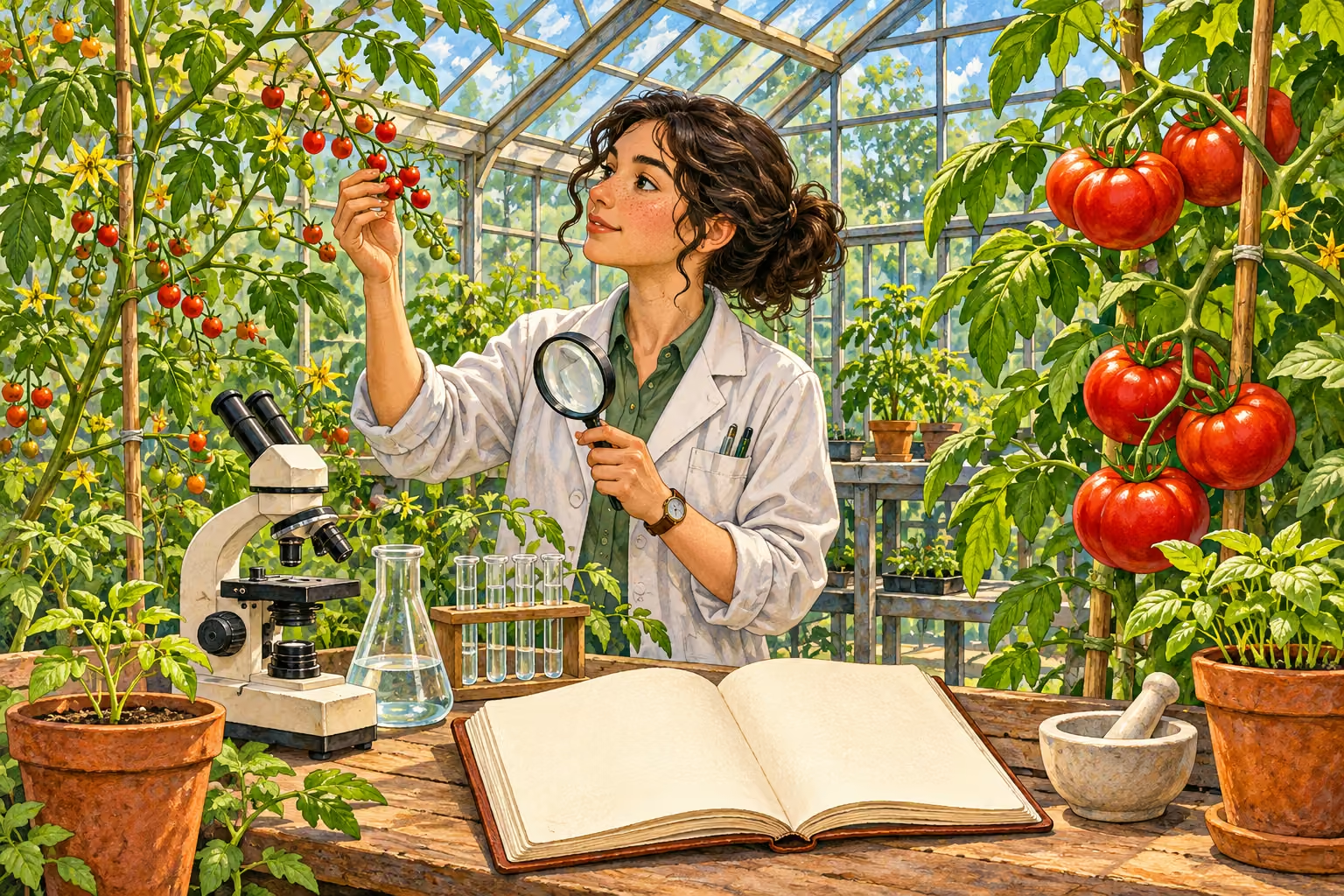
Storybook illustration: A tomato plant showing small wild tomatoes and larger cultivated fruit
  • Read and answer an authentic Academic Reading passage from your own book.
  • Use evidence rather than matching single keywords.
  • Review paraphrase, question instructions and answer format.

Source: Cambridge IELTS 17 Academic · Test 2 · Reading Passage 2, printed pages 41–43. This is a companion activity. The Cambridge passage and test questions are not reproduced here.

2Open your Cambridge book · 3 minutes

Open Cambridge IELTS 17 Academic · Test 2 · Reading Passage 2, printed pages 41–43 (Questions 14–26). Keep the original passage and questions beside this lesson.

The reading and test questions are in your book; EnglishDrills provides the related learning activities only.

3Predict and prepare · 4 minutes

Consider how farmers might improve a crop while keeping useful features found in wild plants. Predict two benefits and one possible concern about changing a crop’s genes.

Keep predictions separate from evidence in the reading.

4Read the instructions · 4 minutes

Look at the original paper’s question types and word limits. Before answering, explain the difference between a statement that contradicts the passage and one the passage does not address.

5Timed reading · 20 minutes

Complete the original Questions 14–26 independently. Allow about 3 minutes to skim, 14 minutes to answer and 3 minutes to check. Keep the original question wording in view.

Record answers on the Cambridge answer sheet or on paper. This companion does not reproduce or automatically mark the test questions.

Useful topic language: domestication, wild relatives, gene editing, genetic diversity, crop traits.

6Find the evidence · 7 minutes

Choose three answers that were difficult. In your book, underline the evidence and note the paraphrase that connects it to the question.

For NOT GIVEN, identify what information is missing. For FALSE, locate the contradiction. A matching keyword alone is not enough.

7Notice paraphrases · 5 minutes

Find two examples where a question uses different words from the passage. Then choose one scientific term and explain it in your own words.

8Check and diagnose · 6 minutes

Check your answers using the answer key in your Cambridge book. Record your score out of 13, then classify each error as evidence, paraphrase, instruction or spelling.

This practice score does not predict a full IELTS Reading band.

9Explain your reasoning · 4 minutes

Explain whether the approach described in the reading could help address a food-growing problem. Support your view with evidence from the paper.

Ask a partner or teacher to challenge the evidence. Then explain one answer again without looking at the key.

10Reflect and transfer · 4 minutes

  • I followed the full instruction and word limit.
  • I distinguished contradiction from missing information.
  • I checked the evidence and spelling.

Homework: Which reading strategy helped you most? For homework, revisit two difficult questions and explain the evidence before looking at the answer key.