English Drills
Home › Teacher lessons › Mechatronics and Human–Machine Interaction

Mechatronics and Human–Machine Interaction

A complete B2 classroom lesson designed in the EnglishDrills teacher-lesson format.

B255–60 minutesRobotics & engineeringPrintable
Teacher lesson: Look at the title. What do you already know about this topic? Write two ideas, then compare with a partner. Work through the nine panels in order, or choose the sections that suit your class. Teacher answers and the listening script are stored separately.
Teacher AnswersBack to Teacher Lessons
1 Lesson Goals
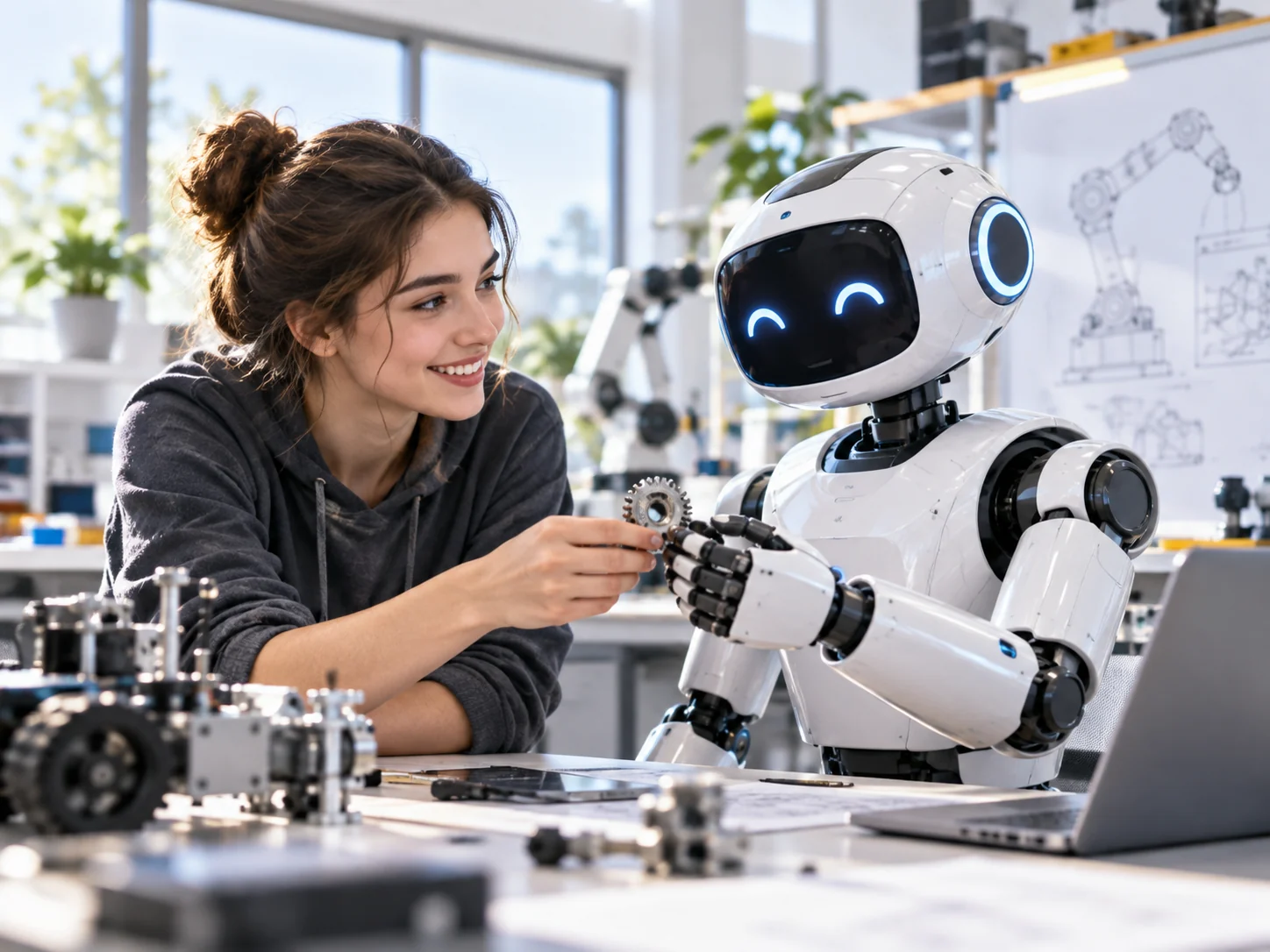
A student collaborating with a friendly robot in a lab

By the end of this lesson, I will be able to:

  • understand the main ideas and key details in Mechatronics and Human–Machine Interaction.
  • learn and use important vocabulary from the lesson.
  • use the lesson language in speaking or writing.
Start here: What do you already know about this topic? Tell a partner one idea.
2 Reading
Before you read:

Look at the title. What do you already know about this topic? Write two ideas, then compare with a partner.

Mechatronics combines mechanical engineering, electronics, computer science and control systems. The aim is to create machines that can sense their surroundings, process information and respond automatically. Modern robotic arms are a good example. Sensors detect the position of objects, motors create movement and software controls each action. Unlike older robots that repeated fixed movements, many newer systems can adjust in real time.

Mechatronics is also important in healthcare. Surgical robots can translate a surgeon’s movements into smaller and more precise actions. Exoskeletons can support people with mobility difficulties or help workers lift heavy objects. In these systems, timing is critical. If a machine responds too slowly or too strongly, the user may lose balance or control.

Safety is therefore central to human–machine interaction. Engineers may use soft materials, rounded edges, emergency stops and sensors that slow or stop a machine when a person is nearby. As artificial intelligence develops, mechatronic systems may become more independent and adaptable. The challenge will be to make these machines useful without making them unpredictable or unsafe.
3 Vocabulary
Key words: mechatronics · sensor · precision · mobility · adaptable

Write a short meaning or synonym for each word.

mechatronics –

sensor –

precision –

mobility –

adaptable –

4 Check Your Understanding

1. Which fields are combined in mechatronics?

2. How do newer robotic arms differ from older ones?

3. How can surgical robots help doctors?

4. Why is timing important in exoskeletons?

5. Name two safety features used in human-machine systems.

5 Language Focus

Complete the sentences with the correct present perfect form of the verb in brackets.

1. Robotic systems (become) more flexible.

2. Engineers (develop) safer sensors and controls.

3. Mechatronics (expand) into healthcare.

4. Machines (begin) to use more real-time feedback.

6 Listen & Speak

Listen

Listen to your teacher. You will hear the text twice. Answer the questions.

1. What are collaborative robots sometimes called?

2. Where are they designed to work?

3. Why do they often move more slowly?

4. What can happen if a person enters a risky area?

Speak

Discuss with a partner or small group.

• Where could exoskeletons be useful?
• What makes a robot feel safe to work beside?
• Should highly independent machines always have an emergency human override?

7 Use Your English

Something New

Invent a human-assist machine. One student presents the design and the other acts as a safety reviewer asking two questions. Then swap roles.

Write

Write 150–180 words explaining how mechatronics can help people and what engineers must do to keep these systems safe.

8 Puzzle or Game
Draw, Mime or Describe

Choose a useful word from this lesson. Do not say the word. Draw it, mime it, or describe it. Your partner has three guesses.

Swap roles and play again with a different word.

9 Success Criteria ✓

Tick each statement when you can do it.

  • I can explain the main idea of the lesson.
  • I can use at least three new words correctly.
  • I can complete the language task.
  • I can share an idea in spoken or written English.

One thing I am proud of today:

10 Show What You Can Do
Final challenge: Mechatronics and Human–Machine Interaction

Plan: Note your strongest idea, 3 useful words or phrases, and one supporting detail from the lesson.

Respond: Write a short paragraph of 6–8 sentences, or prepare a 45-second spoken response, showing what you learned.

Reflect: Underline the part of your response that best shows your progress.