English Drills
Home › Teacher Lessons › Grade/Year 7 & 8 English lessons › Comparing Two Sources

Comparing Two Sources

Social studies evidence for a Grade/Year 7 or 8 classroom, with reading, subject language, speaking and writing.

Grade/Year 7 & 845–60 minutesPrintable
Teacher lesson: Read the short text aloud and model the first task. Students can plan in a language they know well before speaking or writing in English. Use all twelve panels or adjust the pace for your learners.
Teacher AnswersBack to Teacher Lessons
1Reading
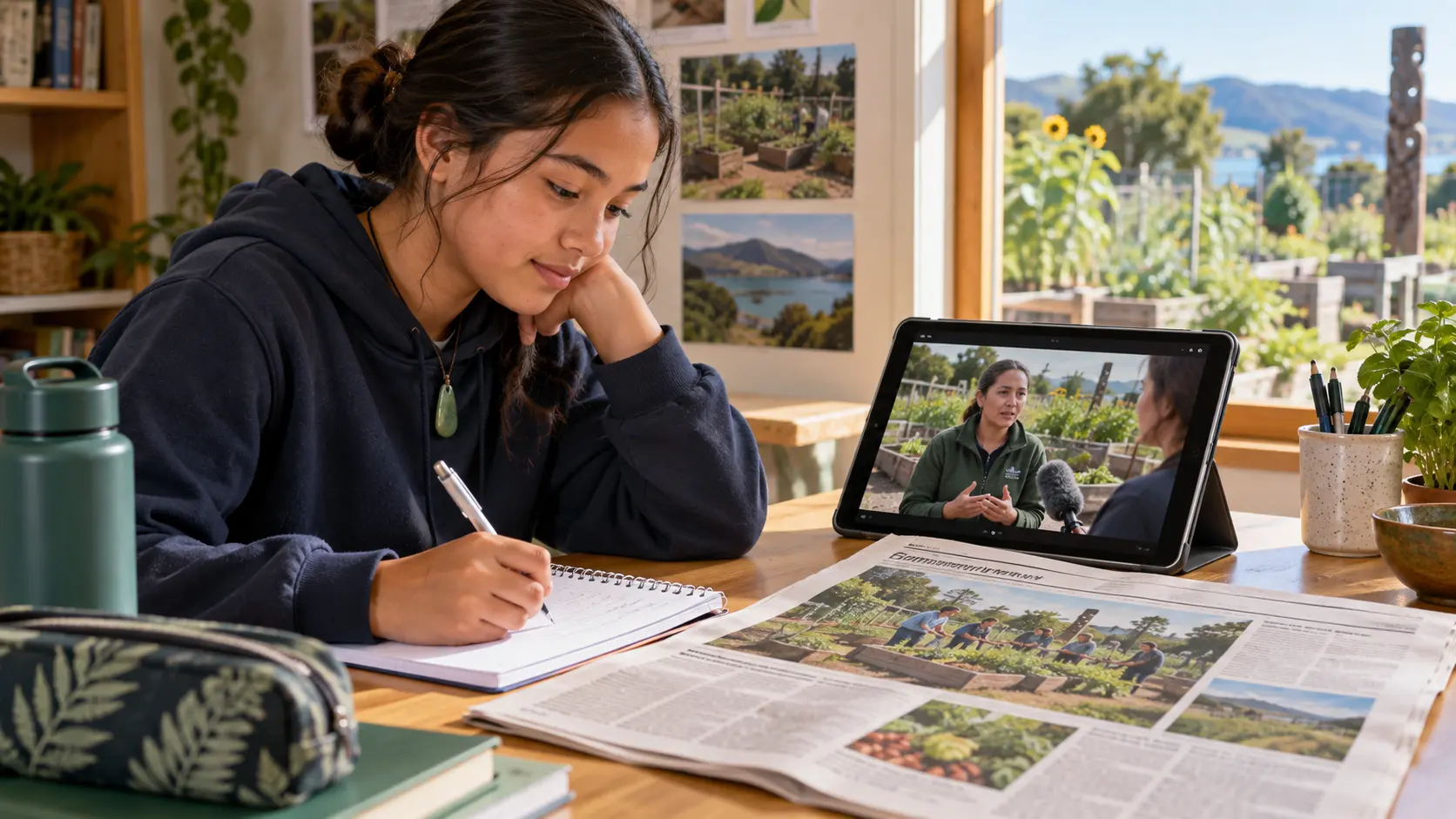
A student compares a newspaper report with an interview about a community garden
Illustration: Comparing two sources.
Before you read:

Look at the title. What do you know about social studies evidence? Tell a partner one idea.

A class is learning about a community garden. A local newspaper reports that volunteers planted 100 vegetables last month. A student interview says the garden helps neighbours meet and share skills. Both sources are useful, but they answer different questions. The newspaper gives a number and a date. The interview describes a person’s experience. The teacher asks students to identify who made each source and what it can tell them. Students decide to use both when writing a short explanation of the garden’s value.
2Vocabulary
Words: source · volunteer · interview

Write a short meaning or example. You may use a language you know well first.

source –
volunteer –
interview –
3Comprehension

1. Which source gives the number 100?

2. What does the interview describe?

3. Why use both sources?

4. What should students identify?

4Language Focus

Use these sentence starters. Change the words to fit your idea.

According to the newspaper, .
The interview adds that .

Write one sentence of your own.

5Listen and Note

Listen as your teacher reads the text again. Note two key ideas or facts.

First idea:

Second idea:

Compare your notes with a partner.

6Speaking

Compare a fact from a report with an opinion or experience from a person.

Use a sentence starter from panel 4. Ask your partner one follow-up question.

Useful questions: “Could you explain that?” “Why do you think so?”

7Try It

Use this skill: How might you use social studies evidence in another lesson or everyday situation? Give one example and explain it to a partner.

Draw a quick plan or write three key words before you speak.

8Writing

Write a short paragraph using one detail from each source.

Plan in a language you know well if it helps. Then write your answer in English.

9Word Study

Choose the correct words from this lesson’s reading.

Word bank: source · interview

A newspaper is one . An gives a person’s experience.

10Sentence Builder

Put these words in the right order. Check the capital letter and punctuation.

reports / a number and a date / The newspaper / .
11School English

A classmate uses only the interview. Suggest another source.

Write a polite question or response you could use at school. Then say it to a partner.

12Exit Reflection ✓

Take a few minutes to reflect.

1. One useful word I learnt in this lesson:

2. One thing I can do in class:

3. One question I still have: