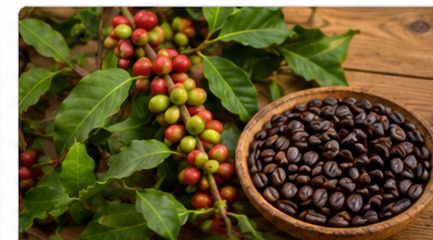
Coffee from cherry to bean. EnglishDrills.org illustration.
Free levelled English reading practice. Read for meaning first, then use the full Speed Reading tool to time yourself and track your progress.
Coffee begins as a seed inside a fruit called a coffee cherry. Coffee plants grow best in warm regions, often at higher elevations in countries near the equator. When the cherries become ripe, they are usually red or yellow and are picked by hand or machine. The seeds inside are what we call coffee beans. After picking, the fruit must be removed from around the beans. Producers use different methods to do this, and the method can affect the final flavour. The beans are then dried until they contain much less moisture. At this stage they are often called green coffee. Before coffee can be brewed, the green beans are roasted. Heat causes major chemical changes: the beans become brown, develop their familiar smell and produce hundreds of flavour compounds. After roasting, the beans are cooled and later ground. Hot water passes through or mixes with the ground coffee to remove flavour and aroma compounds. The drink in a cup therefore has a long journey behind it, involving farming, harvesting, processing, drying, roasting, grinding and brewing. Small differences at each stage can change how the final coffee tastes.