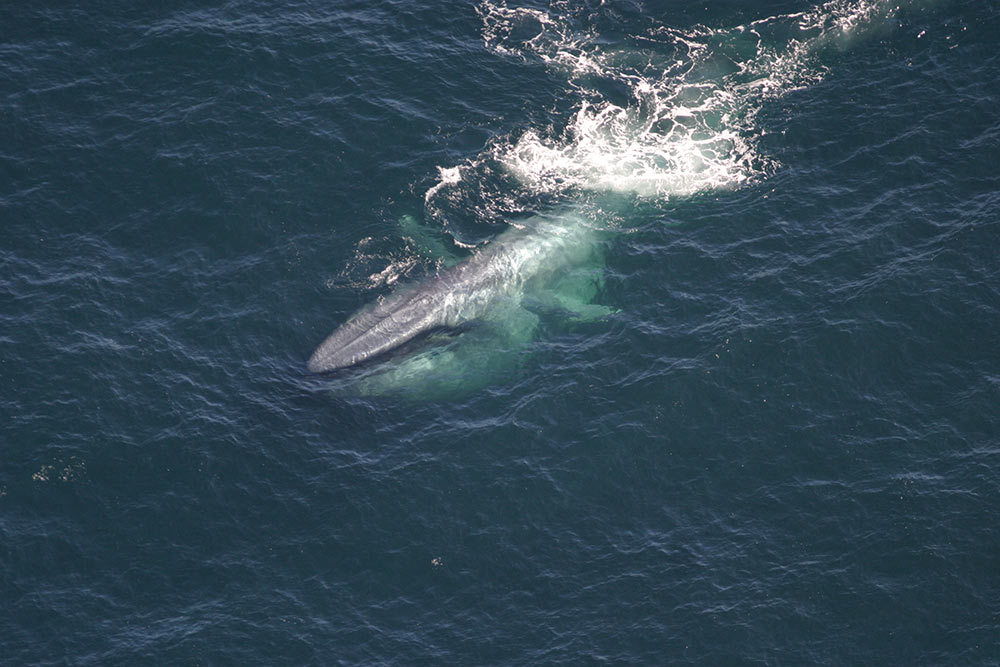
Blue whale near the ocean surface. Photo: NOAA Fisheries/Lisa Conger (public domain).
Free levelled English reading practice. Read for meaning first, then use the full Speed Reading tool to time yourself and track your progress.
Blue whales are the largest animals known to have lived on Earth, yet much of their lives takes place out of human sight. They produce extremely powerful, low-frequency sounds. Low sounds can travel long distances through seawater, allowing whales to communicate across areas far larger than people can see. Scientists record these calls with underwater microphones called hydrophones. Different populations produce recognisable patterns of sound, and some calls change over time. Researchers are still studying exactly what every call means. Noise from ships and other human activity can overlap with whale sounds, making the ocean a more difficult place to communicate. Listening to blue whales helps scientists study both whale behaviour and the changing soundscape of the sea.
Comprehension questions
What kind of sounds do blue whales produce?
Why can these sounds travel far?
What are underwater microphones called?
Do scientists understand every whale call?
What human activity can interfere with whale sounds?