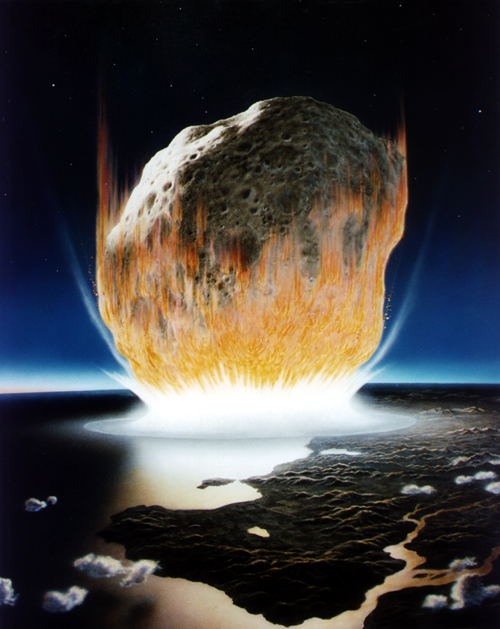
NASA artist’s depiction of the asteroid impact linked to the dinosaur extinction. Image from Wikimedia Commons.
Free levelled English reading practice. Read for meaning first, then use the full Speed Reading tool to time yourself and track your progress.
Dinosaurs lived on Earth for more than 160 million years. Then, about 66 million years ago, all non-bird dinosaurs disappeared during a mass extinction. For many years, scientists debated what caused this enormous change. A major clue was discovered in a thin layer of rock found in different parts of the world. The layer contained unusually high levels of iridium, an element that is rare near Earth's surface but more common in asteroids. Scientists proposed that a huge asteroid had struck Earth. Later, researchers identified the Chicxulub crater beneath Mexico's Yucatán Peninsula. The crater is about 180 kilometres wide and dates to around the time of the extinction. The impact would have released extraordinary energy. Fires, earthquakes and giant waves occurred near the impact area. Dust and other material entered the atmosphere and reduced sunlight, causing major changes to climate and food chains. Many species died, although some animals survived. Birds are now understood to be living dinosaurs, descended from one branch of the dinosaur family. The asteroid explanation is supported by strong evidence, although scientists continue to study exactly how the extinction unfolded.