English Drills
Home › Teacher lessons › Chocolate: From Cocoa to Treat

Chocolate: From Cocoa to Treat

A complete A2 classroom lesson with the EnglishDrills nine-colour lesson sequence.

A250–60 minutesFood & societyPrintable
Teacher lesson: Look at the picture and title. What do you already know? Discuss with a partner and write two ideas. Work through the nine panels in order, or choose the sections that suit your class. Teacher answers and the listening script are stored separately.
Teacher Answers
1 Lesson Goals
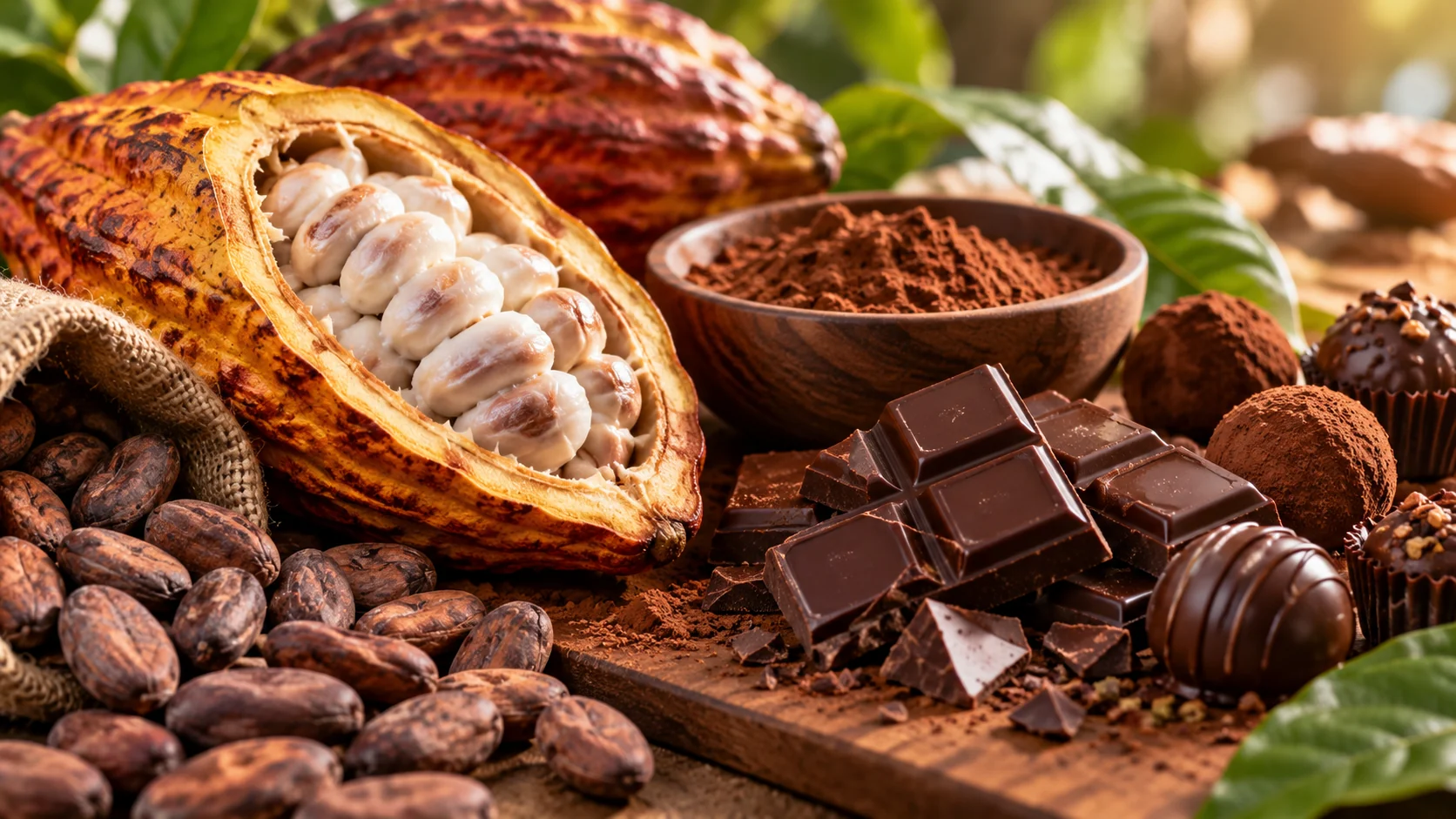
Cocoa pods, cocoa beans and chocolate

By the end of this lesson, I will be able to:

  • understand the main ideas and key details in Chocolate: From Cocoa to Treat.
  • learn and use important vocabulary from the lesson.
  • use the lesson language in speaking or writing.
Start here: What do you already know about this topic? Tell a partner one idea.
2 Reading
Before you read:

Look at the picture and title. What do you already know? Discuss with a partner and write two ideas.

Chocolate begins with cocoa beans, which grow inside large pods in warm parts of the world. Many cocoa beans come from West Africa and South America. After the beans are collected, they are fermented, dried and roasted. They are then ground and mixed with ingredients such as sugar and milk. Some small companies make artisan chocolate by hand and focus on fair trade. This can help farmers receive a fairer price for their work.
3 Vocabulary
Words: cocoa bean · fair trade · artisan · mass-produced · ingredient

Write a short meaning or example for each word.

cocoa bean –

fair trade –

artisan –

mass-produced –

ingredient –

4 Check Your Understanding

1. What is the main topic of the reading?

2. Write one important detail from the reading.

3. What happens or is explained next?

4. Which detail did you find most interesting?

5. What can we learn from this topic?

5 Language Focus

Choose much, many, some or a lot of.

1. There are cocoa beans in a pod.

2. Chocolate often contains sugar.

3. companies make artisan chocolate.

4. Farmers do not always receive money from mass-produced chocolate.

6 Listen & Speak

Listen

Listen to your teacher. You will hear the text twice. Answer the questions.

1. Where do cocoa beans grow?

2. What happens after beans are dried?

3. What does fair trade try to improve?

4. Why can artisan chocolate cost more?

Speak

Discuss with a partner.

• What was new or surprising?
• How does this topic connect with real life?
• What question would you like to ask about it?

7 Use Your English

Something New

In pairs, invent a new chocolate bar. Choose three ingredients, give it a name and price, then try to sell it to another pair.

Write

Describe your ideal chocolate product in 70–90 words. Include ingredients, taste and packaging.

8 Puzzle or Game
Vocabulary Detective

Choose four words from the Vocabulary panel. Write a short clue for each word without writing the word itself. Swap with a partner and see how many you can guess.

Bonus: Use one of the words in a new sentence.

9 Success Criteria ✓

Tick each statement when you can do it.

  • I can explain the main idea of the lesson.
  • I can use at least three new words correctly.
  • I can complete the language task.
  • I can share an idea in spoken or written English.

One thing I am proud of today:

10 Show What You Can Do
My final challenge: Chocolate: From Cocoa to Treat

Plan: Write 5 useful words or ideas from the lesson, or make a quick labelled sketch.

Write: Write 5–7 sentences that show what you learned. Try to use at least 3 words from the Vocabulary panel.

Share: Explain your work to a partner for about 30 seconds.