By the end of this lesson, I will be able to:
- understand the main ideas and key details in Expand Your Sentences: Add Reasons and Details.
- learn and use important vocabulary from the lesson.
- use the lesson language in speaking or writing.
A complete A2 classroom lesson adapted from the EnglishDrills literacy-writing material and redesigned for the international EnglishDrills teacher-lesson format.
By the end of this lesson, I will be able to:
Look at the title and picture. What do you already know about this writing skill? Write two ideas, then compare with a partner.
Write a short meaning or synonym for each word.
main idea –
reason –
detail –
example –
expand –
1. What makes a short sentence stronger?
2. Which word can introduce a reason?
3. What three questions can a writer ask?
4. Why are details useful?
5. How can an example help a reader?
Join each pair of ideas with because.
1. School lunches are helpful they give students energy.
2. Reading is useful it teaches us new words.
3. Exercise is important it keeps the body active.
4. Libraries are valuable people can learn there for free.
Listen
Listen to your teacher. You will hear the text twice. Answer the questions.
1. What is Mia writing about?
2. What reason does she add?
3. What example does she give?
4. What does she check at the end?
Speak
Discuss or practise with a partner.
• Say one short sentence about school. Your partner asks “Why?”
• Add a reason with because.
• Add one more detail or example.
Something New
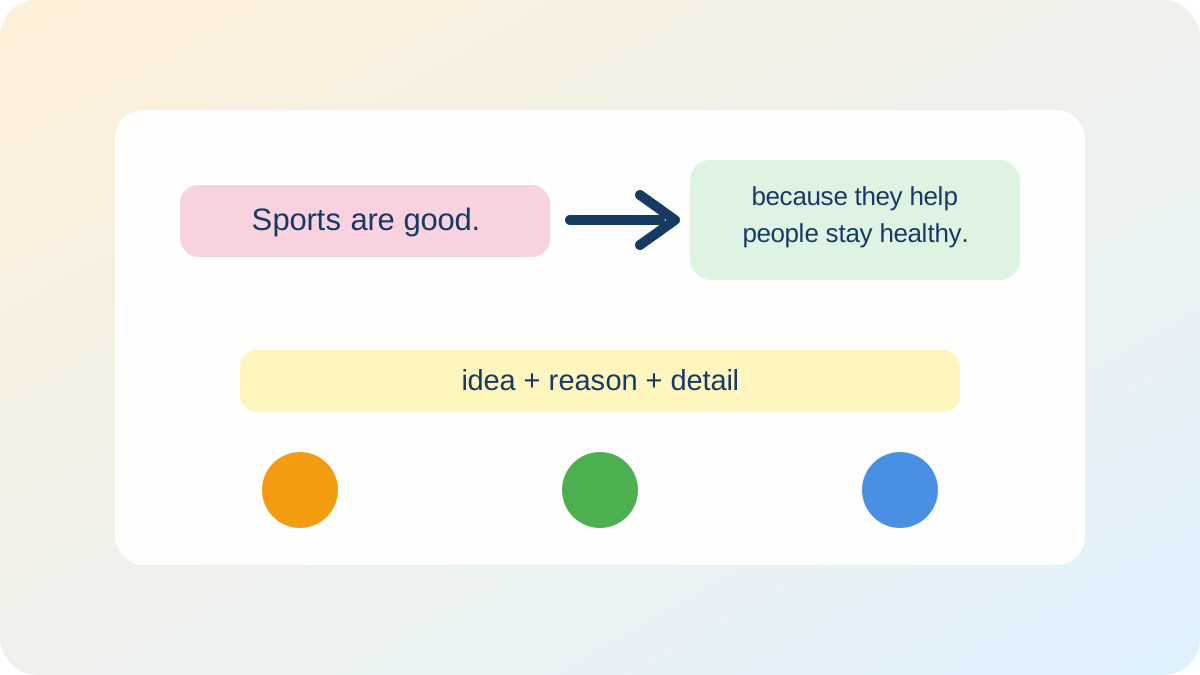
Start with a two- or three-word idea. Add one piece at a time: subject + verb → reason → detail → example. Try to make the final sentence clear but not too long.
Write
Choose one topic — homework, sport, reading or healthy food. Write six strong sentences. Each sentence should include a clear idea and at least one reason, detail or example.
Choose four words from the Vocabulary panel. Write a short clue for each word without writing the word itself. Swap with a partner and see how many you can guess.
Bonus: Use one of the words in a new sentence.
Tick each statement when you can do it.
Plan: Write 5 useful words or ideas from the lesson, or make a quick labelled sketch.
Write: Write 5–7 sentences that show what you learned. Try to use at least 3 words from the Vocabulary panel.
Share: Explain your work to a partner for about 30 seconds.