English Drills
Home › Teacher lessons › Edit and Improve Your Writing

Edit and Improve Your Writing

A complete B1 classroom lesson adapted from the EnglishDrills literacy-writing material and redesigned for the international EnglishDrills teacher-lesson format.

B150–60 minutesWriting & editingPrintable
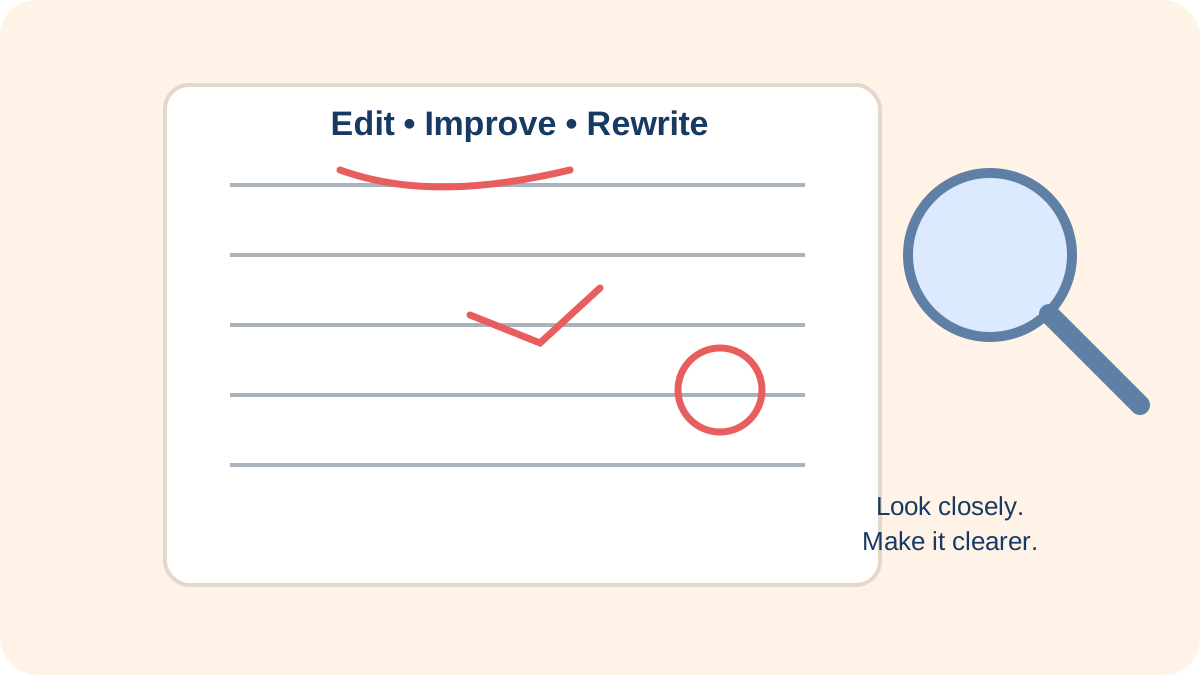
Teacher lesson: Look at the title and picture. What do you already know about this writing skill? Write two ideas, then compare with a partner. Work through the nine panels in order, or choose the sections that suit your class. Teacher answers and the listening script are stored separately.
Teacher AnswersBack to Teacher Lessons
1 Lesson Goals
Edit and Improve Your Writing

By the end of this lesson, I will be able to:

  • understand the main ideas and key details in Edit and Improve Your Writing.
  • learn and use important vocabulary from the lesson.
  • use the lesson language in speaking or writing.
Start here: What do you already know about this topic? Tell a partner one idea.
2 Reading
Before you read:

Look at the title and picture. What do you already know about this writing skill? Write two ideas, then compare with a partner.

Good writing is rarely finished after the first draft. Editing means reading again and making purposeful improvements. A simple editing routine can focus on three areas. First, check clarity: does every sentence make sense? Second, check support: does each important reason have a detail or example? Third, check accuracy: look at capital letters, full stops, commas and common spelling.

Editing is not only about correcting mistakes. It can also make ideas stronger. “Homework is good” is grammatically correct, but “Homework can be helpful because it gives students extra practice” communicates much more. Rewriting one or two weak sentences can noticeably improve a whole paragraph.
3 Vocabulary
Key words: edit · clarity · accuracy · draft · rewrite

Write a short meaning or synonym for each word.

edit –

clarity –

accuracy –

draft –

rewrite –

4 Check Your Understanding

1. What three areas can an editing routine check?

2. Is editing only about fixing mistakes?

3. Why is “Homework can be helpful…” stronger?

4. What punctuation should students check?

5. How can rewriting affect a paragraph?

5 Language Focus

Correct and improve each sentence. Check capitals, punctuation and grammar.

1. my school has a library it is open every day

2. I like sport because it is fun it keeps me healthy

3. students needs quiet places to study

4. For example many student use the library after class

6 Listen & Speak

Listen

Listen to your teacher. You will hear the text twice. Answer the questions.

1. What does Leo check first?

2. What problem does he find in his second sentence?

3. What detail does he add?

4. What does he check last?

Speak

Discuss or practise with a partner.

• Read one sentence from your own writing to a partner.
• Your partner suggests one way to make it clearer or more specific.
• Decide whether to accept the suggestion and explain why.

7 Use Your English

Something New

The teacher writes four short sentences containing different problems: missing punctuation, weak detail, repetition and unclear meaning. Teams race to identify the problem and propose an improved version.

Write

Write a first draft of 100–130 words on a familiar topic. Then use this checklist: clarity, supporting details, capital letters, punctuation and spelling. Rewrite at least three sentences and underline the changes.

8 Puzzle or Game
Two Truths and a Trick

Write three short statements about the Reading panel. Make two true and one false. Read them to a partner. Can your partner find the trick?

9 Success Criteria ✓

Tick each statement when you can do it.

  • I can explain the main idea of the lesson.
  • I can use at least three new words correctly.
  • I can complete the language task.
  • I can share an idea in spoken or written English.

One thing I am proud of today:

10 Show What You Can Do
Final challenge: Edit and Improve Your Writing

Plan: Note your strongest idea, 3 useful words or phrases, and one supporting detail from the lesson.

Respond: Write a short paragraph of 6–8 sentences, or prepare a 45-second spoken response, showing what you learned.

Reflect: Underline the part of your response that best shows your progress.