By the end of this lesson, I will be able to:
- understand the main ideas and key details in Plan Before You Write.
- learn and use important vocabulary from the lesson.
- use the lesson language in speaking or writing.
A complete B1 classroom lesson adapted from the EnglishDrills literacy-writing material and redesigned for the international EnglishDrills teacher-lesson format.
By the end of this lesson, I will be able to:
Look at the title and picture. What do you already know about this writing skill? Write two ideas, then compare with a partner.
Write a short meaning or synonym for each word.
plan –
draft –
supporting detail –
direction –
deadline –
1. Why can planning make writing faster?
2. Does a plan need full sentences?
3. What should come after each reason?
4. What example is given for extra practice?
5. How can a plan give writing direction?
Use the notes to write a clear full sentence.
1. extra practice / helps / difficult subjects
2. homework / teaches / responsibility
3. students / meet / deadlines
4. a short plan / makes / writing clearer
Listen
Listen to your teacher. You will hear the text twice. Answer the questions.
1. What topic is Hana planning?
2. What is her opinion?
3. What is her first reason?
4. What example will she use?
Speak
Discuss or practise with a partner.
• Choose one topic: uniforms, homework, school lunches or phones.
• Tell your partner your opinion and two reasons.
• Your partner asks for one example for each reason.
Something New
The teacher gives a topic. Students have only 60 seconds to write an opinion, two reasons and two examples. Compare plans and decide which notes would be easiest to turn into a paragraph.
Write
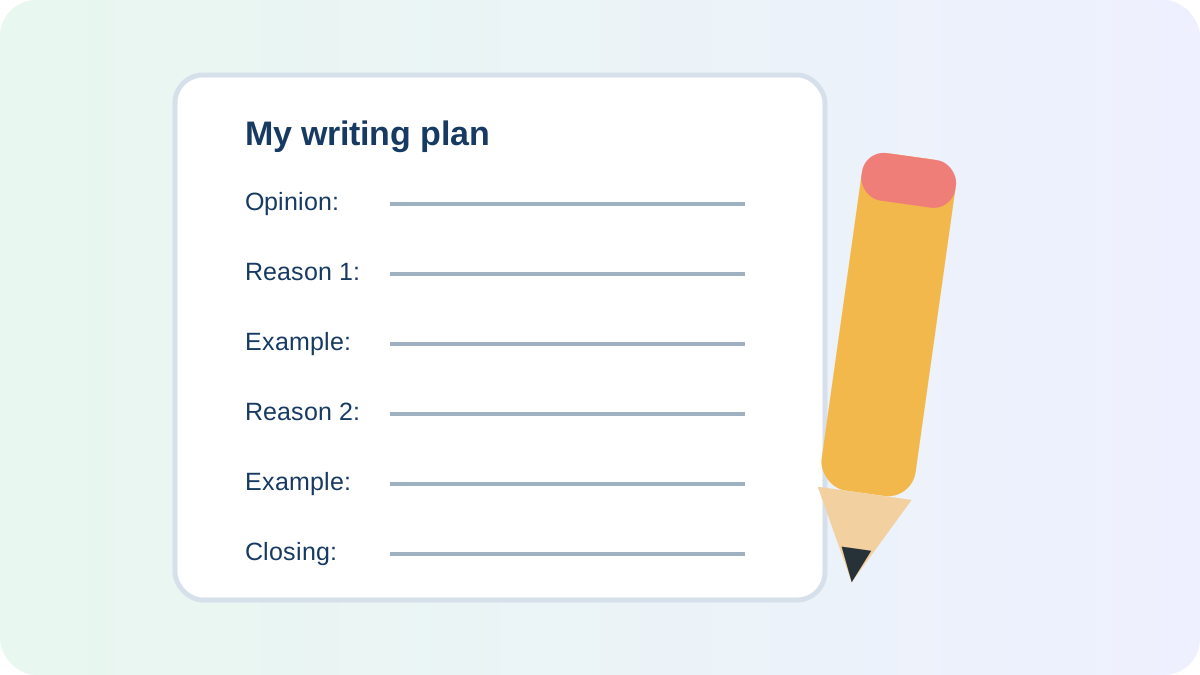
Plan and then write 110–140 words on: “Should schools start later in the morning?” Show your plan above your paragraph using short notes.
Write three short statements about the Reading panel. Make two true and one false. Read them to a partner. Can your partner find the trick?
Tick each statement when you can do it.
Plan: Note your strongest idea, 3 useful words or phrases, and one supporting detail from the lesson.
Respond: Write a short paragraph of 6–8 sentences, or prepare a 45-second spoken response, showing what you learned.
Reflect: Underline the part of your response that best shows your progress.