English Drills
Home › Teacher lessons › The Amazon Rainforest

The Amazon Rainforest

A complete B2 classroom lesson built around an engaging topic. Use it as a 45–60 minute lesson, or choose individual sections for a shorter class.

B255–60 minutesEnvironment & sciencePrintable
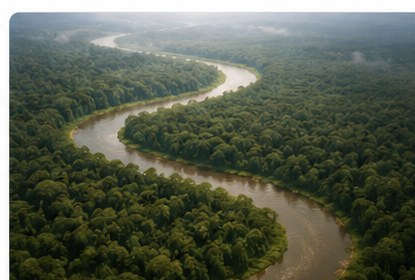
Teacher lesson: Look at the picture and title. What do you already know about this topic? Write two ideas, then compare with a partner. Work through the nine panels in order, or choose the sections that suit your class. Teacher answers and the listening script are stored separately.
Teacher AnswersOpen related EnglishDrills reading
1 Lesson Goals
The Amazon rainforest

By the end of this lesson, I will be able to:

  • understand the main ideas and key details in The Amazon Rainforest.
  • learn and use important vocabulary from the lesson.
  • use the lesson language in speaking or writing.
Start here: What do you already know about this topic? Tell a partner one idea.
2 Reading
Before you read:

Look at the picture and title. What do you already know about this topic? Write two ideas, then compare with a partner.

The Amazon rainforest covers a vast area of South America and contains an extraordinary range of plants, animals and microorganisms. Its rivers and forests influence regional rainfall and store large amounts of carbon. The rainforest is not an untouched wilderness: Indigenous peoples have lived in and managed parts of it for thousands of years. Today, the region faces pressures from deforestation, fires, mining, roads and agricultural expansion. These activities can fragment habitats and release stored carbon into the atmosphere. Protecting the Amazon involves difficult choices about livelihoods, land rights, development and conservation. Scientists also warn that large-scale forest loss could weaken the systems that recycle moisture and support rainfall across the region.
3 Vocabulary
Words: biodiversity · deforestation · fragment · livelihood · conservation

Write a short meaning or synonym for each word.

biodiversity –

deforestation –

fragment –

livelihood –

conservation –

4 Check Your Understanding

1. Where is the Amazon rainforest?

2. Name two things the forest influences or stores.

3. Have Indigenous peoples lived there only recently?

4. Name two pressures on the region.

5. What could large-scale forest loss weaken?

5 Language Focus

Choose the modal that best fits the meaning.

1. Governments protect important habitats if they want to reduce species loss.

2. Forest loss reduce rainfall in some areas.

3. Conservation plans respect local land rights.

4. New roads increase pressure on remote forests.

6 Listen & Speak

Listen

Listen to your teacher. You will hear the text twice. Answer the questions.

1. What do researchers use satellites to monitor?

2. What can satellite images reveal?

3. Why is local knowledge important?

4. What can communities explain?

Speak

Discuss with a partner or small group.

• How should countries balance development and conservation?
• Why are Indigenous land rights important in environmental debates?
• What information do satellites provide that people on the ground cannot?

7 Use Your English

Something New

In groups, rank four actions from most helpful to least helpful for the Amazon. Compare with another group and defend one disagreement.

Write

Write 140–170 words explaining two major pressures on the Amazon and two possible responses.

8 Puzzle or Game
Draw, Mime or Describe

Choose a useful word from this lesson. Do not say the word. Draw it, mime it, or describe it. Your partner has three guesses.

Swap roles and play again with a different word.

9 Success Criteria ✓

Tick each statement when you can do it.

  • I can explain the main idea of the lesson.
  • I can use at least three new words correctly.
  • I can complete the language task.
  • I can share an idea in spoken or written English.

One thing I am proud of today:

10 Show What You Can Do
Final challenge: The Amazon Rainforest

Plan: Note your strongest idea, 3 useful words or phrases, and one supporting detail from the lesson.

Respond: Write a short paragraph of 6–8 sentences, or prepare a 45-second spoken response, showing what you learned.

Reflect: Underline the part of your response that best shows your progress.