English Drills
Home › Teacher lessons › Cleopatra: Queen of Egypt

Cleopatra: Queen of Egypt

A complete B2 classroom lesson built around an engaging topic. Use it as a 45–60 minute lesson, or choose individual sections for a shorter class.

B255–60 minutesHistoryPrintable
Teacher lesson: Look at the picture and title. What do you already know about this topic? Write two ideas, then compare with a partner. Work through the nine panels in order, or choose the sections that suit your class. Teacher answers and the listening script are stored separately.
Teacher AnswersOpen related EnglishDrills reading
1 Lesson Goals
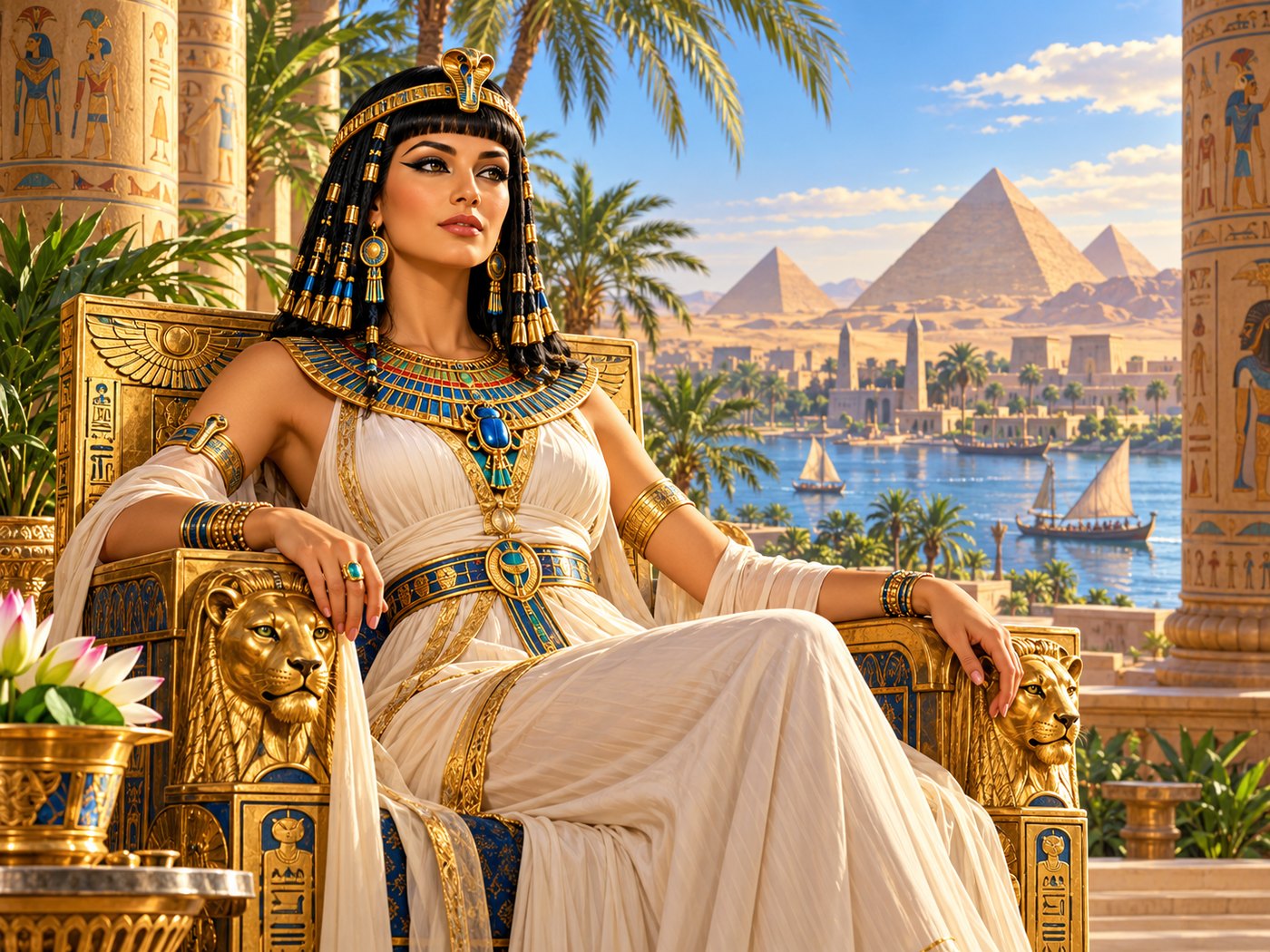
AI illustration inspired by Cleopatra and ancient Egypt

By the end of this lesson, I will be able to:

  • understand the main ideas and key details in Cleopatra: Queen of Egypt.
  • learn and use important vocabulary from the lesson.
  • use the lesson language in speaking or writing.
Start here: What do you already know about this topic? Tell a partner one idea.
2 Reading
Before you read:

Look at the picture and title. What do you already know about this topic? Write two ideas, then compare with a partner.

Cleopatra VII was the last active ruler of the Ptolemaic Kingdom of Egypt. She became queen in 51 BCE during a period of political conflict and growing Roman influence in the eastern Mediterranean. Cleopatra formed alliances with Julius Caesar and later Mark Antony, relationships that were both personal and political. Ancient writers often described her through the political attitudes and stereotypes of their own time, which makes it difficult to separate fact from later legend. Cleopatra spoke several languages and presented herself in ways that connected her rule with Egyptian traditions as well as the Greek heritage of the Ptolemaic dynasty. After the defeat of Antony and Cleopatra by Octavian’s forces, both died in 30 BCE, and Egypt became a Roman province.
3 Vocabulary
Words: dynasty · alliance · stereotype · heritage · province

Write a short meaning or synonym for each word.

dynasty –

alliance –

stereotype –

heritage –

province –

4 Check Your Understanding

1. Which kingdom did Cleopatra rule?

2. When did she become queen?

3. Which two Roman leaders were connected with her?

4. Why are ancient descriptions difficult to evaluate?

5. What happened to Egypt after 30 BCE?

5 Language Focus

Complete with the past perfect where it is needed.

1. By the time Cleopatra met Julius Caesar, she (become) queen.

2. After Antony and Cleopatra (lose) the war, Octavian controlled Egypt.

3. Before Egypt became a Roman province, the Ptolemaic dynasty (rule) for centuries.

4. Ancient writers described events that already (happen).

6 Listen & Speak

Listen

Listen to your teacher. You will hear the text twice. Answer the questions.

1. What do historians compare with written accounts?

2. What can coins show?

3. What can inscriptions reveal?

4. Does one source give a complete picture?

Speak

Discuss with a partner or small group.

• Why do famous historical figures attract legends?
• How can bias affect historical writing?
• Which source would you trust most: a coin, an inscription or a written account? Why?

7 Use Your English

Something New

One student is a museum curator and one is a visitor. The curator explains what is fact and what may be legend about Cleopatra. Then swap roles.

Write

Write 140–170 words explaining why historians must treat sources about Cleopatra carefully.

8 Puzzle or Game
Vocabulary Detective

Choose four words from the Vocabulary panel. Write a short clue for each word without writing the word itself. Swap with a partner and see how many you can guess.

Bonus: Use one of the words in a new sentence.

9 Success Criteria ✓

Tick each statement when you can do it.

  • I can explain the main idea of the lesson.
  • I can use at least three new words correctly.
  • I can complete the language task.
  • I can share an idea in spoken or written English.

One thing I am proud of today:

10 Show What You Can Do
Final challenge: Cleopatra: Queen of Egypt

Plan: Note your strongest idea, 3 useful words or phrases, and one supporting detail from the lesson.

Respond: Write a short paragraph of 6–8 sentences, or prepare a 45-second spoken response, showing what you learned.

Reflect: Underline the part of your response that best shows your progress.